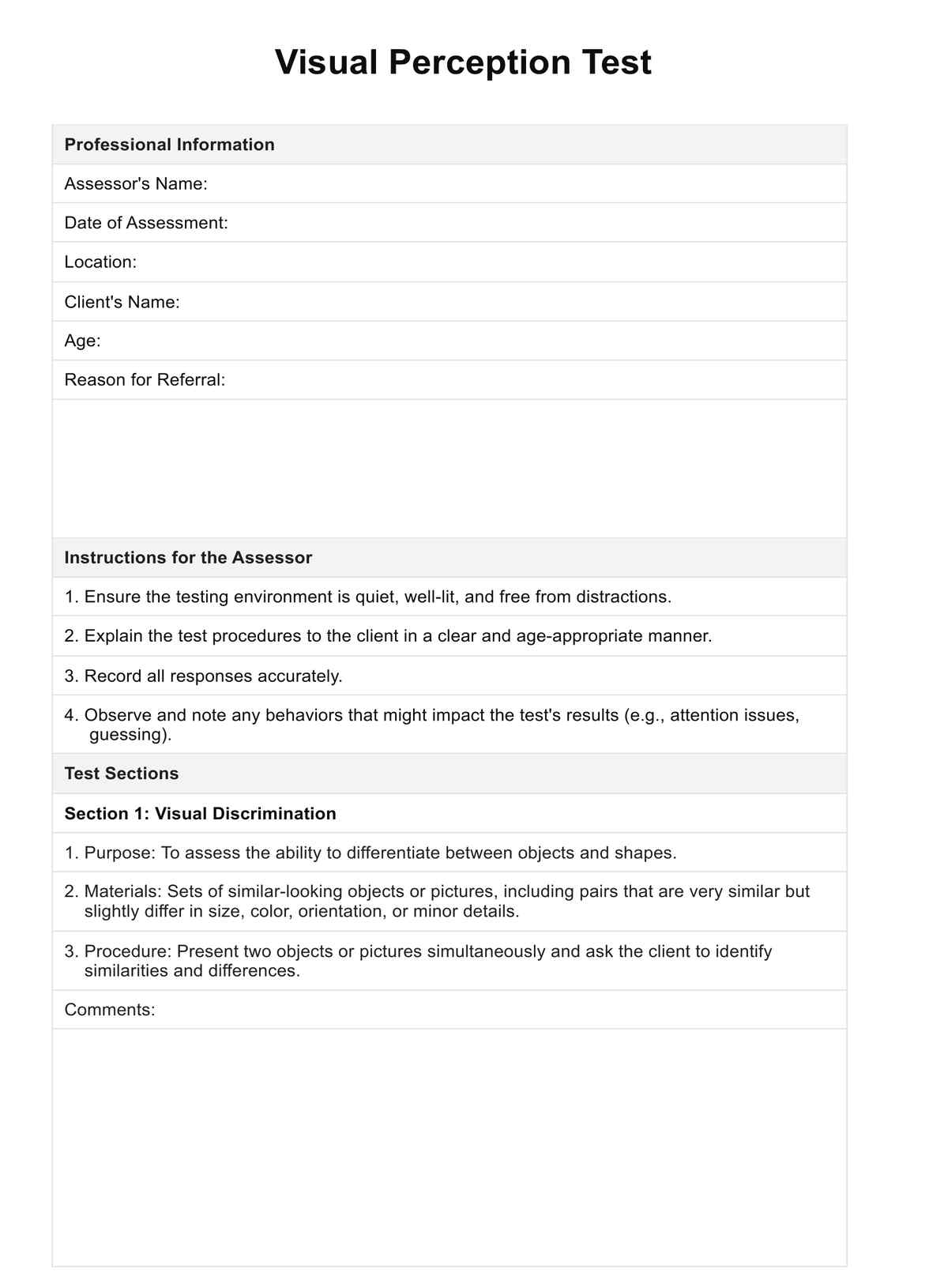
Benefits of conducting this test
Conducting a Visual Perception Test offers several significant benefits for test takers across a wide age range, providing valuable insights into their visual perceptual skills and potential areas for improvement. This standardized test is crucial in identifying specific strengths and weaknesses in visual attention and other cognitive functions related to visual processing. Here are three key benefits of conducting this test:
Identification of specific visual perceptual deficits
Conducting this test helps pinpoint specific deficits in visual perceptual skills, such as issues with sequential memory or visual field deficits. By isolating these areas, professionals can tailor interventions more effectively, addressing the root of the problem rather than its symptoms. This targeted approach is particularly beneficial for individuals who may have suffered a brain injury or exhibit signs of visual neglect, as it allows for focused rehabilitation efforts.
Guidance for further testing and interventions
The results from this standardized test can indicate the need for further testing in areas where test takers show poor performance. This is particularly useful in developing a comprehensive understanding of an individual's visual perceptual abilities, guiding professionals in recommending further assessments or specific therapeutic activities. It ensures that each intervention is well-suited to the individual's unique needs, enhancing the effectiveness of rehabilitation or educational strategies.
Benchmarking and progress monitoring
By using a standardized test, professionals can benchmark an individual's performance against normative data for their specific age range. This not only helps in identifying deviations from typical development or recovery patterns but also in monitoring progress over time.
As interventions are implemented, subsequent testing can reveal improvements in areas such as visual attention or the reduction of visual field deficits, providing empirical evidence of the efficacy of the chosen strategies and informing adjustments to the intervention plan.
In conclusion, this test is useful for identifying specific visual perceptual deficiencies, guiding future testing and intervention, and tracking progress over time. Its capacity to provide precise insights into a person's visual perceptual abilities makes it essential to a thorough visual cognitive assessment, especially for people recuperating from brain injuries or dealing with visual neglect.