


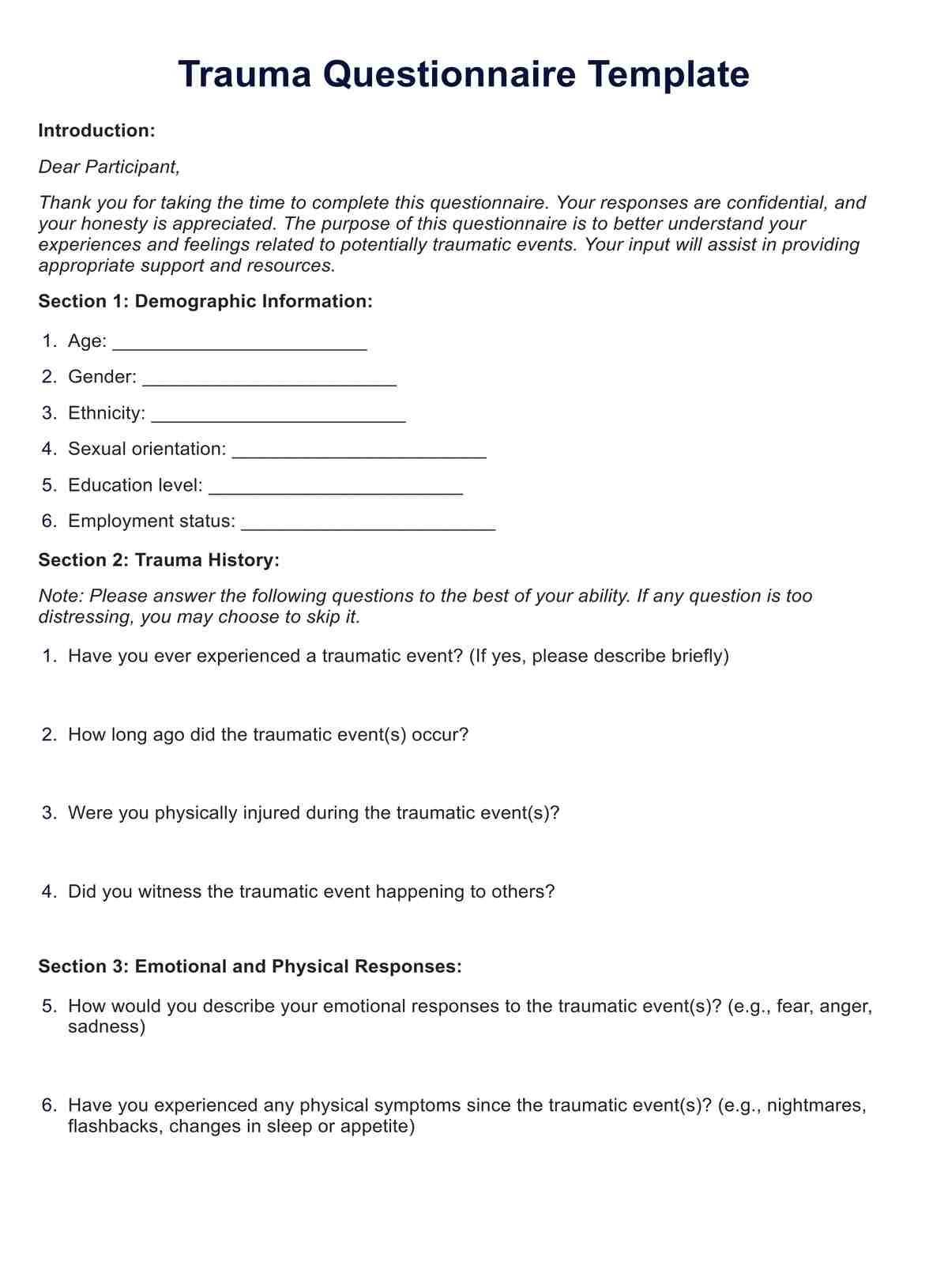




Clinical overview: what is a Trauma Questionnaire?
A trauma questionnaire is a specialized tool designed to assess and evaluate an individual's exposure to traumatic events and the resulting psychological impact. These questionnaires are pivotal in mental health and psychology, serving as valuable instruments for clinicians, researchers, and professionals.
The primary objective of a trauma questionnaire is to gather detailed information about a person's experiences, allowing professionals to understand better and address the effects of trauma on their mental well-being.
Trauma questionnaires play a crucial role in identifying various types of trauma, ranging from acute incidents to chronic exposure, childhood trauma, and assessing their impact on an individual's mental health.
These questionnaires also aid in the early detection of trauma-related disorders, such as post-traumatic stress disorder (PTSD), allowing for timely and appropriate interventions for trauma responses.
A well-constructed trauma questionnaire typically includes questions about the nature and timing of traumatic events, the individual's emotional responses, and the ongoing impact on their daily life.
Questions may cover a range of experiences, including but not limited to accidents, violence, abuse, or natural disasters. The responses provide valuable insights into the individual's coping mechanisms, resilience, and specific areas that may require therapeutic attention.
One of the strengths of trauma questionnaires lies in their adaptability to diverse populations and various forms of trauma. Professionals can customize these tools to suit specific demographics, cultural contexts, or the nature of the traumatic events under consideration. This flexibility ensures that the assessment is accurate and sensitive to the unique needs of each individual.









