






What is Pott's disease?
Pott's disease, also known as spinal tuberculosis or tuberculous spondylitis, is a form of extrapulmonary tuberculosis that affects the spine. It primarily involves the vertebral bodies and can spread to the anterior longitudinal ligament, leading to significant musculoskeletal tuberculosis. This condition is named after Sir Percivall Pott, who first described the association between spinal deformities and tuberculosis in the 18th century.
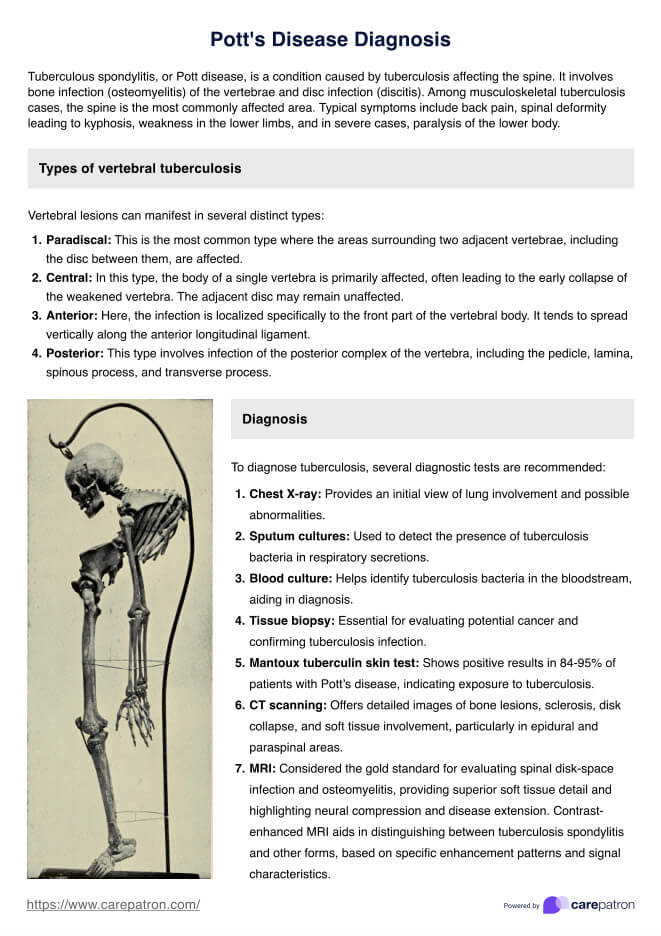
Pott's disease often targets the thoracic spine but can also affect the cervical spine and lumbar spine. When tuberculosis of the spine occurs, it can cause destruction of the intervertebral discs and vertebral bodies, potentially leading to a kyphotic deformity or even neurological complications. In spinal cord medicine, early detection and treatment are crucial to prevent severe outcomes.
The disease can present with a cold abscess, back pain, and sometimes neurological deficits due to spinal cord compression. Active disease requires a combination of antitubercular drugs and, in some cases, surgical treatment. Surgical management is particularly necessary for complicated TB spine patients who exhibit deformity progression or instability.
Treating spinal tuberculosis involves both pharmacological and surgical approaches to manage infection and prevent further damage. Healthcare practitioners classify spinal TB disease based on its severity and progression to tailor the most effective treatment plan. Understanding and addressing Pott's disease is essential to prevent the debilitating consequences associated with this serious form of tuberculous spondylitis.









