









What is post-concussion syndrome?
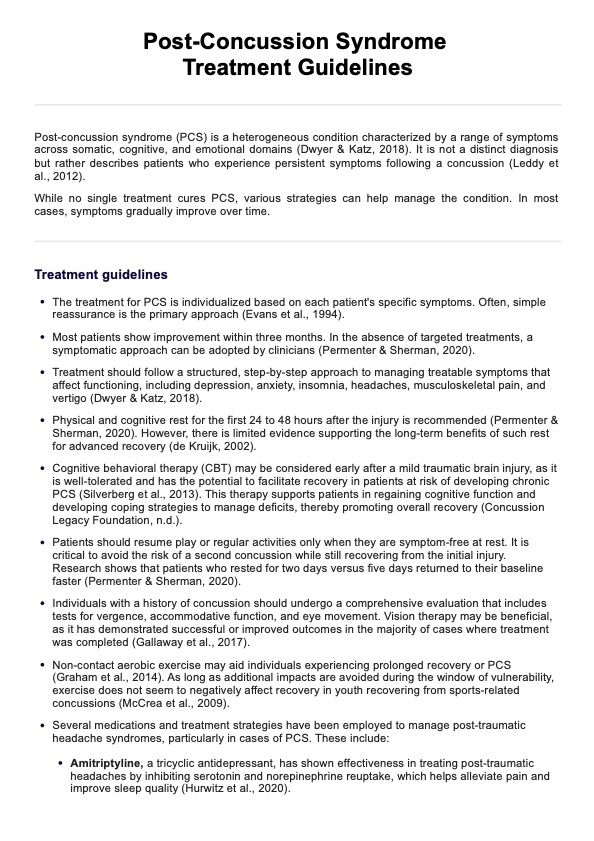
Post-concussion syndrome (PCS) is a complex disorder that can occur following a mild traumatic brain injury (mTBI), such as a concussion. It is characterized by the persistence of concussion symptoms for weeks, months, or even longer after the initial head injury has healed. PCS is not considered a distinct diagnosis; instead, it refers to patients who experience ongoing symptoms after a concussion (Leddy et al., 2012). While most individuals recover from a concussion within a few days or weeks, a subset of patients experience persistent symptoms that significantly impact their quality of life.
PCS typically follows mild traumatic brain injuries, but the exact cause of persistent symptoms remains unclear. Notably, the severity of the initial head trauma does not necessarily predict the onset of PCS. Instead, factors such as age, sex, a history of prior concussions, and pre-existing mental health conditions (e.g., anxiety or depression) are key post-concussion risk factors (Teshome et al., 2022; Varriano et al., 2018). These factors may exacerbate the risk and prolong recovery.
Post-concussion symptoms can be broad, encompassing both physical and cognitive domains, and they tend to mirror the acute concussion symptoms. Common post-concussion syndrome symptoms include (NHS Inform, 2024; Permenter & Sherman, 2020):
- Cognitive symptoms: Problems with memory, attention, and executive functioning are often reported. Patients may describe difficulty concentrating, mental fog, or slowed thinking.
- Physical symptoms: Persistent headaches, dizziness, fatigue, and visual disturbances are common, as well as heightened sensitivity to light and noise. Symptoms may worsen with exertion or stress.
- Emotional and behavioral symptoms: Anxiety, irritability, and depression can arise or worsen after the injury, often contributing to the overall burden of PCS.
- Sleep disturbances: Insomnia or fragmented sleep can exacerbate other symptoms and slow the recovery process.
Imaging studies, such as MRI or CT scans, are generally unremarkable in PCS patients, as the underlying pathophysiology is often not detectable through standard imaging.









