


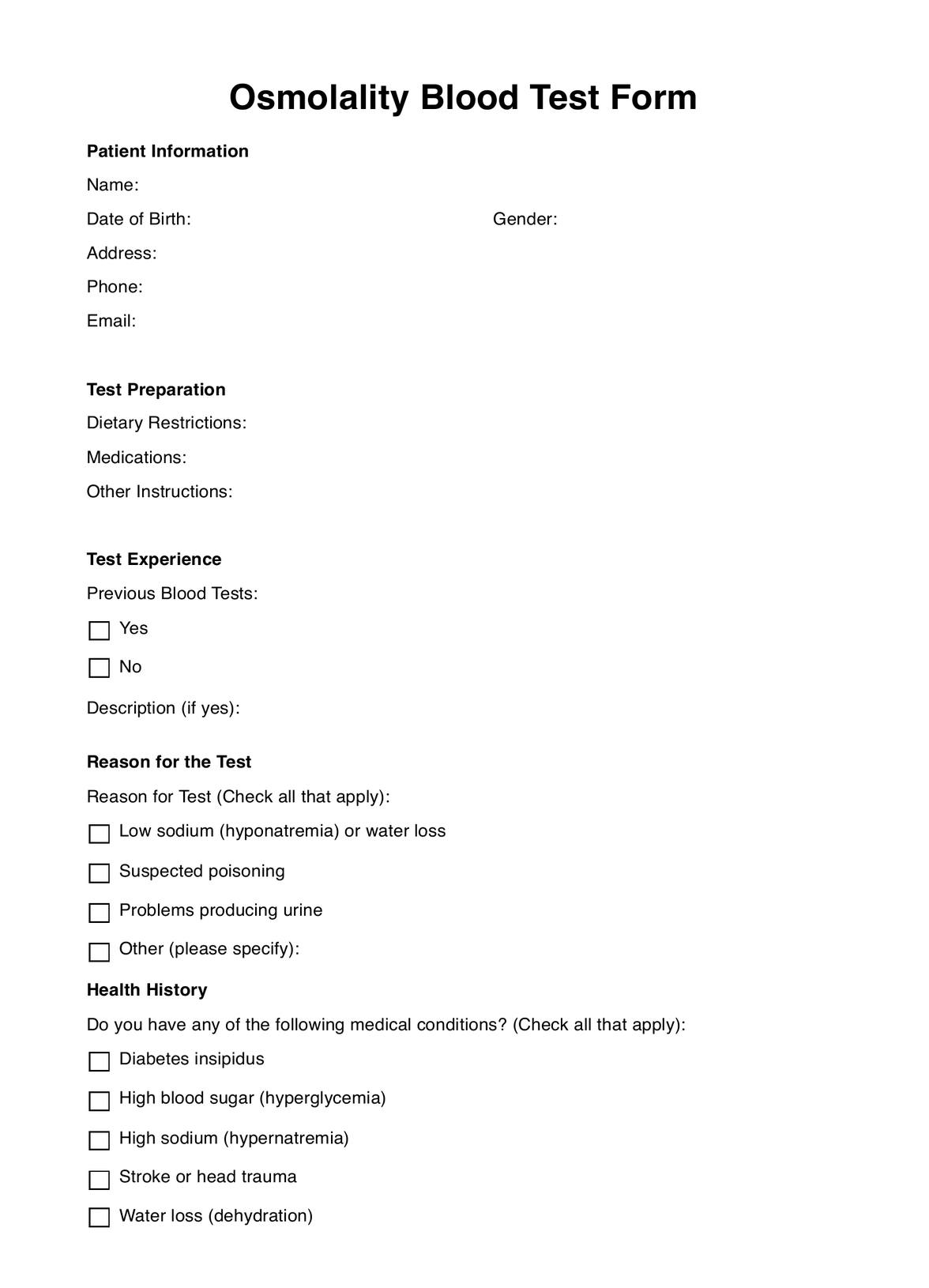




What Is An Osmolality Blood Test?
Osmolality Blood Tests are crucial diagnostic tools that measure the concentration of solutes, or chemical particles, in the fluid portion of your blood. This test is invaluable for assessing your body's water balance and ability to regulate the concentration of solutes in your bloodstream.
A blood sample is typically collected through a simple blood draw during the test. In some cases, osmolality can also be measured using a urine sample.
The osmolality of your blood reflects the balance between water and solutes in your body. When the blood osmolality deviates from the normal range (275 to 295 mOsm/kg), it may indicate an underlying medical condition.
This test is vital in diagnosing and managing various conditions, such as low sodium (hyponatremia), water loss, and disorders like diabetes insipidus. It can also detect poisoning from harmful substances like ethanol or methanol. In normal bodily function, high osmolality triggers the release of antidiuretic hormone (ADH), encouraging the kidneys to reabsorb water and produce more concentrated urine. Abnormal osmolality levels can disrupt this equilibrium, making the Osmolality Blood Test a valuable tool for diagnosing and monitoring several medical conditions related to fluid balance.









