






What is an olecranon fracture?
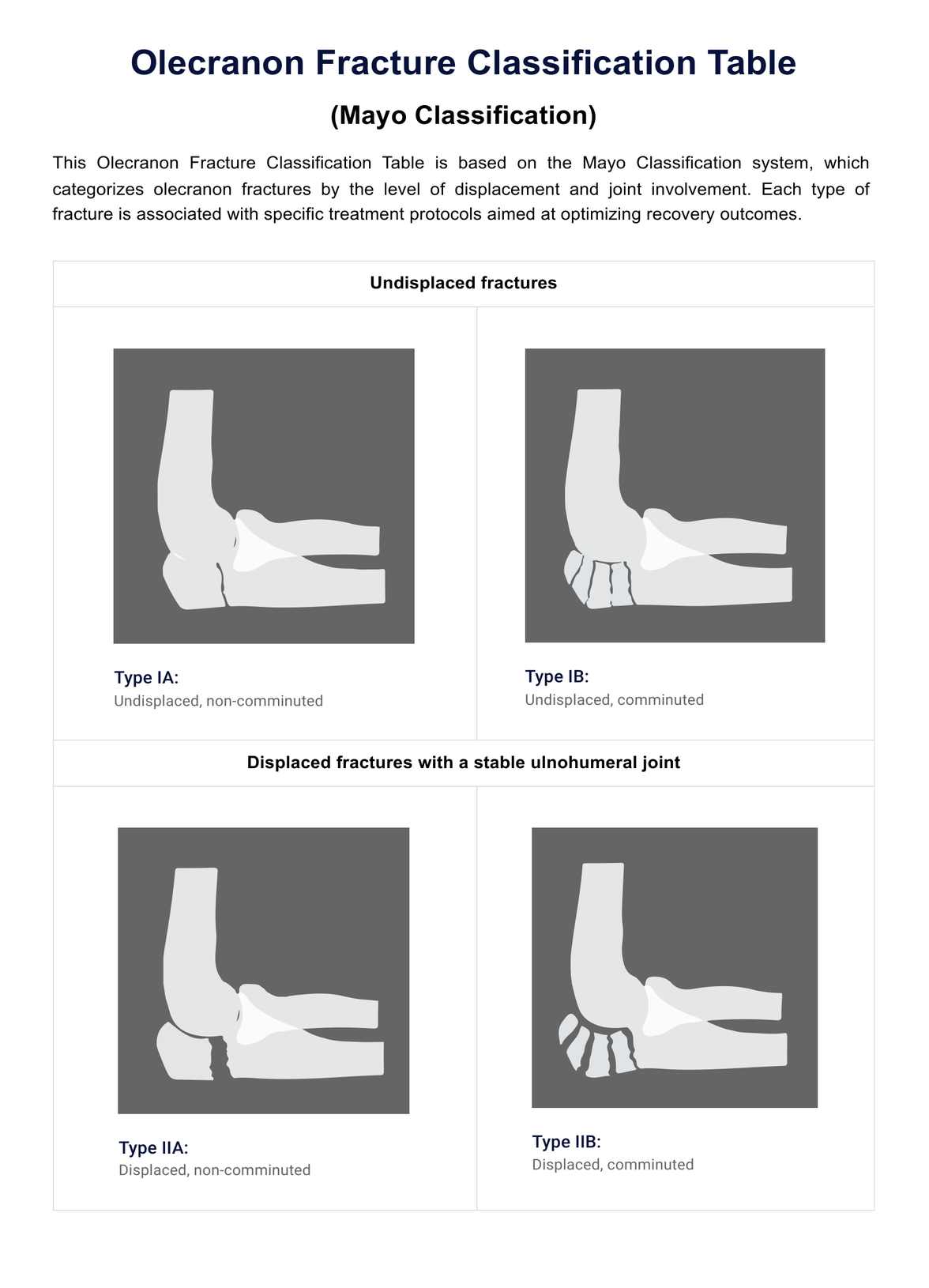
An olecranon fracture is a break in the bony tip of the elbow, known as the olecranon, which forms part of the ulna—one of the three bones comprising the elbow joint. Such fractures are frequently the result of a direct impact to the elbow or a fall onto an outstretched hand, which places significant stress on the elbow joint. These fractures can vary widely in their presentation, ranging from simple cracks that do not affect joint stability to more complex intra-articular fractures where the fracture extends into the elbow joint.
Key variations include displaced fractures, where the bone pieces shift out of alignment, and non-displaced fractures, where the bones maintain normal alignment. The fracture pattern can be simple, with a clean break, or complex, involving comminuted (multiple fragments) or oblique (angled) breaks. A transverse impacted fracture type features a horizontal fracture line across the bone, further complicating the injury if the fragments are driven into each other.
In some cases, the fracture may involve the radial head or occur distally, affecting the stability of the entire upper extremity. Each type of olecranon fracture requires careful assessment to determine the most appropriate treatment to ensure proper healing and restoration of arm function.
Symptoms of an olecranon fracture
The symptoms of an olecranon fracture typically include:
- Pain and tenderness at the elbow
- Swelling and bruising around the elbow
- Difficulty in bending and straightening the arm
- A noticeable deformity if the bone pieces are displaced
Causes of an olecranon fracture
Olecranon fractures can occur due to various reasons, such as:
- A direct impact to the elbow from a fall or blow
- Indirect trauma, such as landing on an extended arm during a fall
- Repetitive stress injuries in athletes or manual laborers
Diagnosing an olecranon fracture
The diagnosis of an olecranon fracture begins with a comprehensive physical examination. During this examination, a healthcare provider assesses the elbow for pain, swelling, and limited range of motion, which indicate a possible fracture. The visual and physical signs provide initial clues about the nature of the injury.
Following the physical exam, imaging tests play a crucial role. X-rays are typically the first step in imaging, as they clearly show bone breaks and alignments. They help confirm the presence of a fracture and provide detailed information about its location and severity.
In cases where more detail is needed, especially to assess any associated injuries to ligaments, tendons, or cartilage, a CT scan may be performed. CT scans offer a more detailed view of the bone and surrounding structures, aiding in a comprehensive assessment.
Occasionally, an MRI might be recommended if there's a suspicion of significant soft tissue damage or to get a clearer view of complex fractures. MRIs are particularly useful for visualizing bone and soft tissue injuries, providing a complete picture informing the treatment plan.
Together, these diagnostic tools enable a precise understanding of the fracture, which is crucial for developing an effective treatment strategy.









