





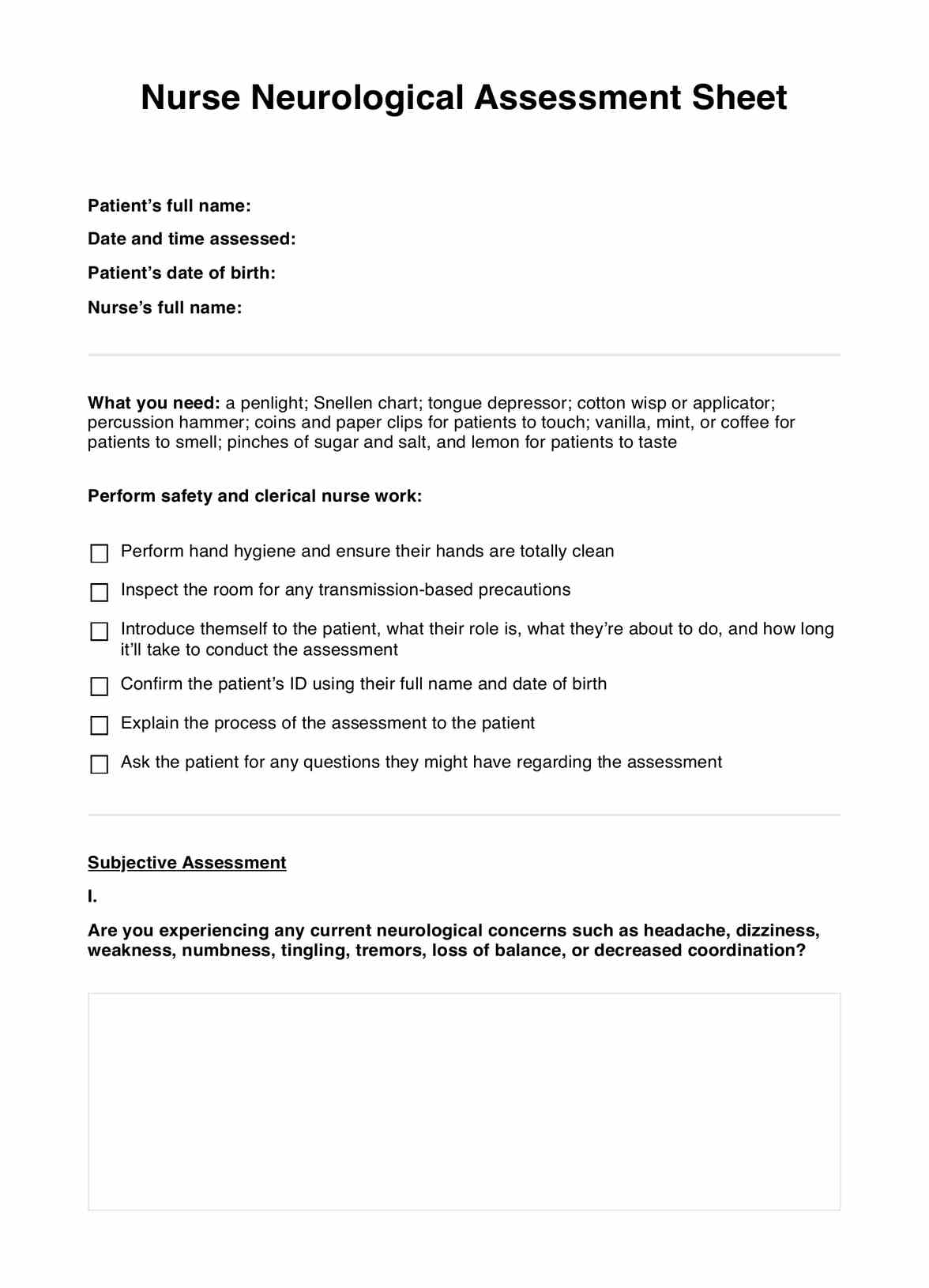




What is a Nurse Neurological Assessment?
A s a comprehensive examination performed by nurses on patients suspected of having neurological disorders or issues. This assessment is performed prior to referring them to neurologists for further diagnostic testing.
During this assessment, nurses will need to do two types of examinations: subjective and objective.
For the subjective part of the Nurse Neurological Assessment, nurses will focus on gathering information based on the patient’s perspective regarding their current neurological status. They will ask the patient questions about any possible symptoms of neurological problems they might be experiencing, like headaches, feelings of numbness, tremors, loss of balance, and feelings of weakness. Other questions they can ask can be related to being able to speak, swallowing food, if they experienced any recent falls, and what medication they are taking (if any).
Another important question that nurses need to ask patients is if they experienced any neurological problems before, such as stroke, seizures, and head injuries. If they dealt with neurological problems before, the nurse will ask if they underwent any treatment. If they did undergo treatment, the nurse would then ask what kind of treatment they were given, how did it go, when they were treated, and how long did the treatment go.
Once they’re done with the subjective part, the nurse will proceed with the objective part. The nurse will perform a series of inspections, auscultations, and palpations on the patient. Nurses will check on the patient’s orientation, level of consciousness, behavior, and more. They will conduct a series of tests like the Mini-Mental State Examination, PERRLA Eye Assessment, a balance and coordination test, motor strength test, and more.
After the test, the nurse will jot down their findings and pass on the information to the next nurse on the shift or to other professionals handling the patient. The information they’ve recorded will help others frame what they plan on doing for the patient.









