









What is a neurological examination?
A neurological examination is a crucial diagnostic tool healthcare professionals use to assess the functioning of the nervous system and a patient's neurological status. It systematically evaluates various aspects of the neurological system, including the brain, spinal cord, and peripheral nerves. This examination helps uncover and diagnose a potential underlying neurological disease a patient might have and monitor neurological conditions such as strokes, brain tumors, epilepsy, multiple sclerosis, and nerve injuries.
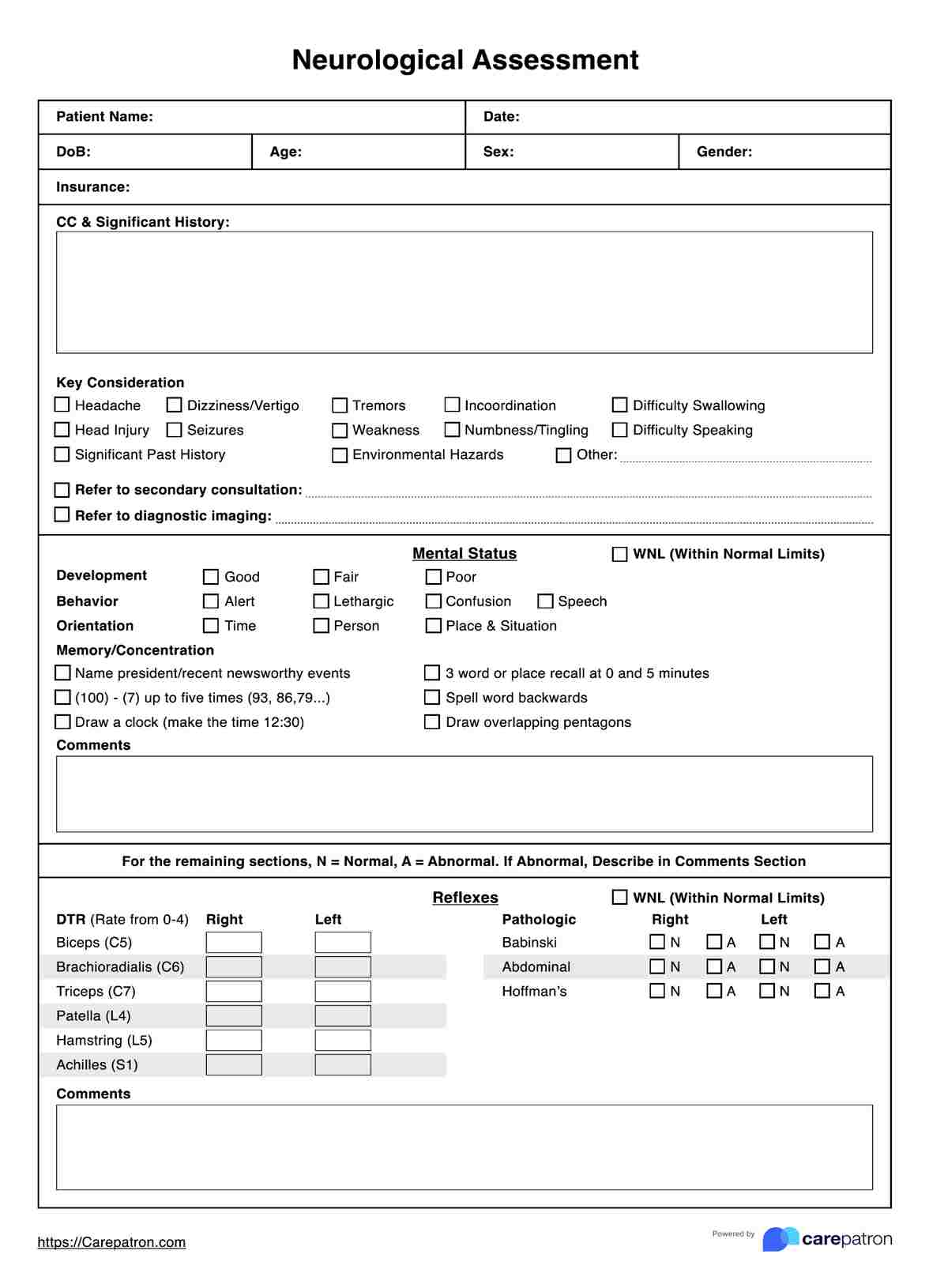
A healthcare provider typically performs tests and assessments during a neurological examination to evaluate different aspects of the nervous system. These assessments may include evaluating the patient's mental status, cranial nerves, motor function, sensory function, coordination, reflexes, and gait.
The mental status assessment examines cognitive function, memory, attention, language skills, and overall mental well-being. Cranial nerve assessments involve testing the function of the twelve cranial nerves that control various functions, such as vision (cranial nerve II: optic nerve), eye movements (cranial nerve III: oculomotor nerve), hearing (cranial nerve VIII: vestibulocochlear nerve), smell (cranial nerve I: olfactory nerve), and facial movements (cranial nerve VII; facial nerve).
Meanwhile, a motor function assessment evaluates muscle strength, tone, and coordination. A sensory function evaluation helps determine if the patient's ability to feel touch, pain, temperature, or vibration is abnormal. Coordination and balance tests assess the patient's ability to perform precise movements and maintain balance.
Additionally, reflex testing is done to check the integrity of the reflex arcs by eliciting responses like knee jerk or ankle jerk. This also involves assessing deep tendon reflexes. A gait examination then analyzes the patient's walking pattern and coordination.
The information gathered from a neurological examination helps healthcare providers identify abnormalities, localize the potential cause, and guide further diagnostic investigations or treatment plans. It is often used with imaging studies like CT scans, MRI scans, or electroencephalograms (EEG) to understand the patient's neurological health comprehensively.









