






What is neurofibromatosis?
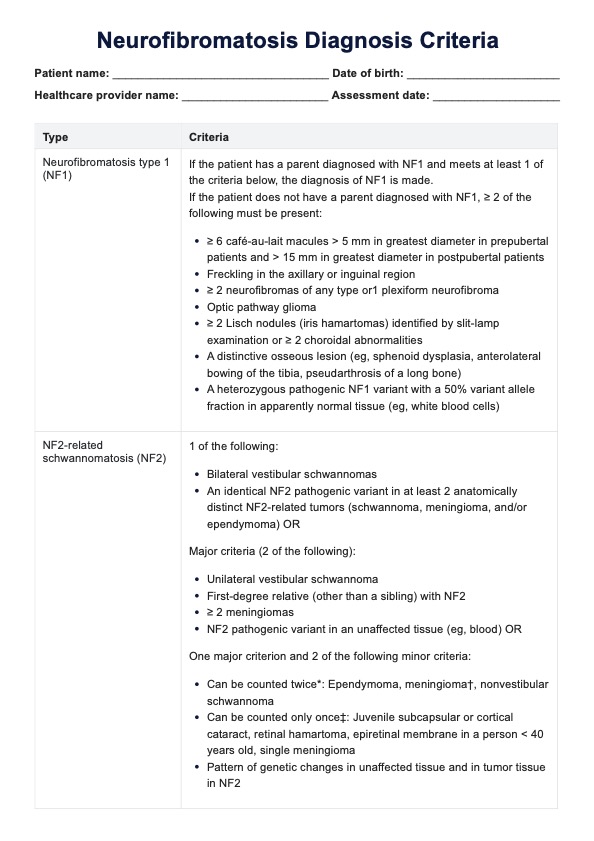
Neurofibromatosis (NF) represents a group of genetic and neurological disorders that affect tissues of nerve cells and impact the brain, spinal cord, and skin. There are three types of neurofibromatosis, and here’s an overview of the three of them:
- Neurofibromatosis type 1 (NF1): The most prevalent form of NF that follows an autosomal dominant inheritance pattern, NF1 is caused by mutations of the NF1 gene located on chromosome 17. This chromosome produces a protein called neurofibromin that suppresses tumors, causing neurofibromin loss and uncontrolled cell growth of nerve tissue.
- Neurofibromatosis type 2 (NF2): This type is usually caused by a faulty gene that may have been passed on from a parent to a child or a spontaneous gene mutation, causing slow-growing, uncontrolled nerve tumors.
- Schwannomatosis (SWN): The rarest form of NF, schwannomatosis is caused by changes in the SMARCB1 or LZTR1 genes, which prevent cells from forming tumors.
Signs and symptoms of neurofibromatosis
Neurofibromatosis manifests with a variety of symptoms, which vary depending on the specific type of the disorder. Here’s an overview of the typical symptoms one may have based on the type of NF:
- NF1: Café au lait spots or coffee-colored patches, freckles in the armpits or groin, tumors on the optic nerve, bone deformities, lisch nodules, high blood pressure, and learning and behavioral problems. These symptoms often appear in early childhood.
- NF2: Benign tumors, hearing loss, vision loss/changes, dizziness, issues with balance, and tumors on peripheral nerves causing peripheral neuropathy. These symptoms may appear during childhood, adolescence, or early adulthood.
- SWN: Pressure on spinal nerve roots and numbness, weakness, headaches, lumps/swollen areas where the tumors are located
Do note that there are cases wherein the patient may not experience all of the symptoms of NF1.









