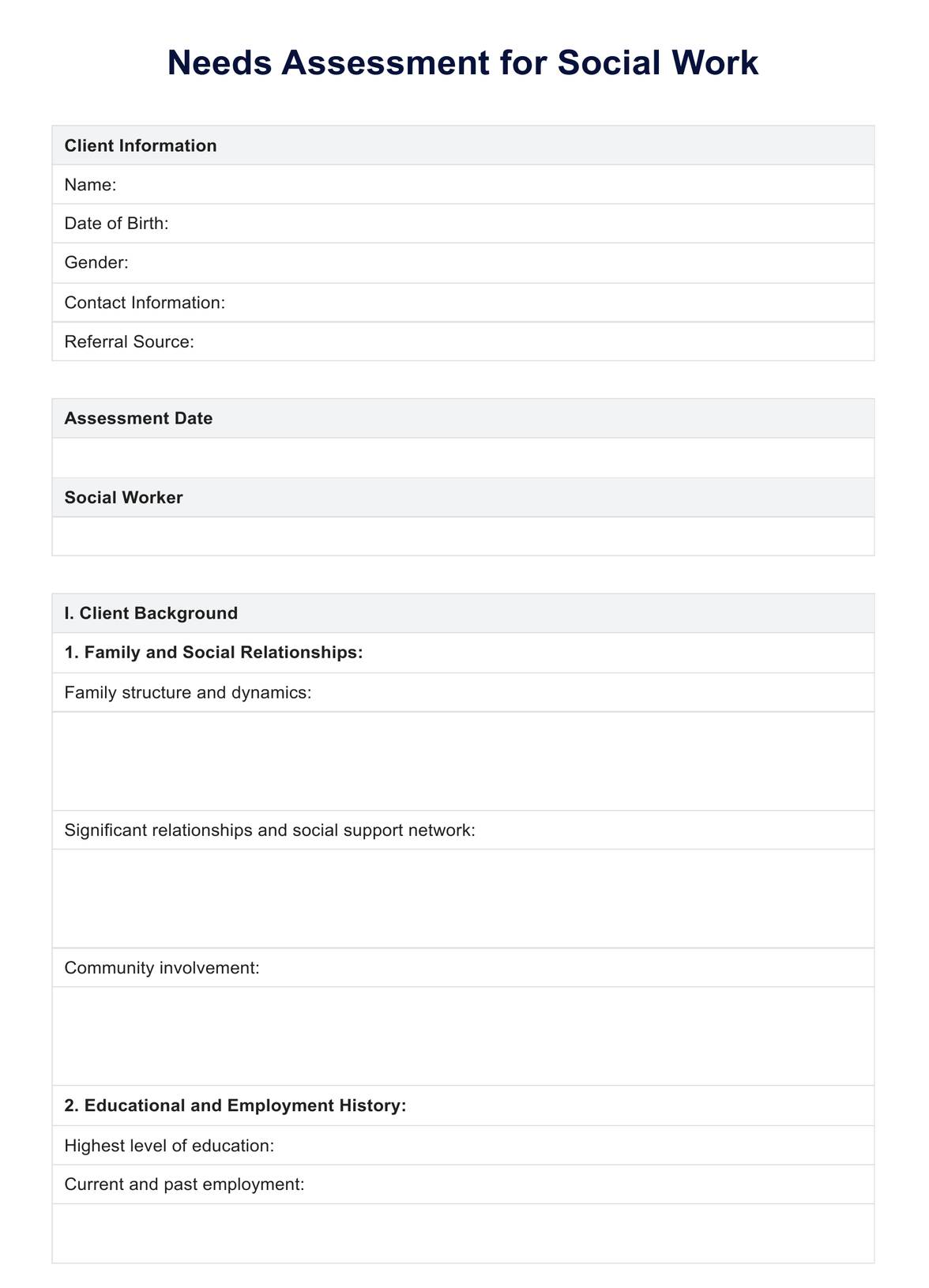
How do Social Work Assessments work?
Social work assessments are a fundamental part of the social work assessment template, and the process, as other assessment tools, are designed to understand and address clients' multifaceted needs. These assessments are comprehensive and involve several key steps:
Gather client information
This initial step involves collecting detailed information about the client's personal, social, and economic attributes. It includes understanding the client's current situation, challenges, and needs. Social workers actively listen, asking open-ended questions to gather as much relevant information as possible. This information can range from basic demographic data to more complex details about the client's life experiences, current living situation, and personal challenges.
Gathering client information is not just about collecting data; it's about building rapport and trust with the client. It's an opportunity for social workers to demonstrate empathy and understanding, creating a safe space for clients to share their stories.
Fill in background information
Documenting the client's history is a critical step in the assessment process. This includes thoroughly reviewing the client's employment history, family background, educational background, and any previous interventions or services they have received.
This historical perspective provides context for the client's current situation. It helps identify patterns, understand past experiences' impact on present circumstances, and recognize recurring challenges or unresolved issues. Background information can also reveal strengths and resilience factors that have helped the client in the past, which can be leveraged in current and future interventions.
Address assessment areas
Social work assessments focus on mental health, physical health, family and social relationships,, and community resources. Each of these areas is critically evaluated to understand the full scope of the client's needs. Mental health assessment might include evaluating the client's emotional state, coping mechanisms, and any history of mental illness. Physical health assessment could involve understanding chronic conditions, physical limitations, or healthcare needs.
Assessing family relationships is crucial to the family assessment tool in understanding the client's support system, family dynamics, and any issues within the person's family relationships that might impact the client. Community resource assessment looks at the availability and accessibility of resources such as housing, food assistance, healthcare services, and educational opportunities.
Highlight strengths and resources
A key component of the social worker assessment and work assessments is identifying the client's strengths and available resources. This strengths-based approach focuses on the client's capabilities, resilience, and potential for growth. Strengths include personal attributes like determination and optimism, skills and talents, supportive relationships, and past successes. Resources might encompass community services, support groups, family support, and financial resources. By highlighting strengths and resources, social workers can help clients see their potential and build upon these assets to formulate a support plan. This approach empowers clients, encouraging them to take an active role in their journey towards well-being.