





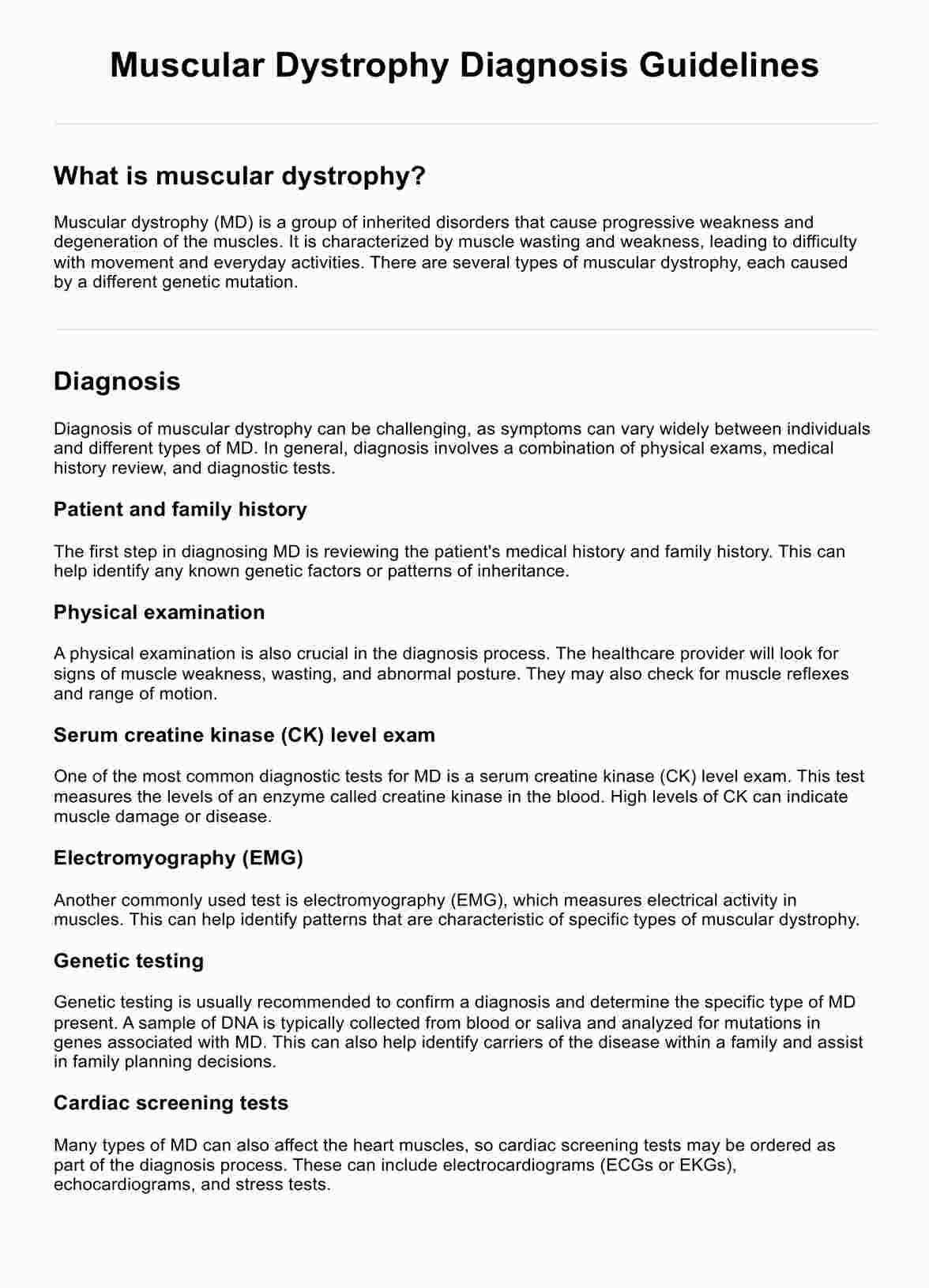




What is muscular dystrophy?
Muscular dystrophy refers to a group of more than 30 genetic diseases characterized by progressive muscle weakness and degeneration of skeletal muscles. Different types, including Duchenne muscular dystrophy, Becker muscular dystrophy, limb-girdle muscular dystrophy, distal muscular dystrophy, congenital muscular dystrophy, facioscapulohumeral muscular dystrophy, and oculopharyngeal muscular dystrophy, vary in age of onset, severity, and pattern of muscle involvement.
As muscular dystrophy occurs, muscles progressively weaken, leading to significant physical limitations. Over time, many individuals with muscular dystrophy lose the ability to walk. The disease can also impact other body parts, including the heart, lungs, gastrointestinal system, endocrine glands, spine, eyes, brain, and other organs. Understanding how muscular dystrophy affects muscle tissue is crucial for accurate diagnosis and management.
Common muscular dystrophy symptoms
The main symptom of muscular dystrophy is progressive muscle weakness. Depending on the type, specific signs and symptoms begin at different ages and in different muscle groups. Common symptoms include:
- Frequent falls
- Difficulty rising from sitting or lying position
- Trouble running and jumping
- Waddling gait
- Walking on the toes
- Large calf muscles
- Muscle pain and stiffness
- Learning disabilities
- Delayed growth
Types of muscular dystrophy
There are many types of muscular dystrophy, each affecting specific muscle groups and showing symptoms at different ages. Some of the more common types include:
- Duchenne muscular dystrophy (DMD): Most common childhood form, primarily affects boys
- Becker muscular dystrophy (BMD): Similar to DMD but milder and later onset
- Limb-girdle muscular dystrophies (LGMD): Affects hip and shoulder muscles
- Facioscapulohumeral muscular dystrophy (FSHD): Affects facial, shoulder and upper arm muscles
- Congenital muscular dystrophies: Present at birth or before age 2
- Myotonic dystrophy: Causes inability to relax muscles after contraction
Causes of muscular dystrophy
Mutations in the genes responsible for healthy muscle structure and function cause most cases of muscular dystrophy. The mutations mean muscle cells can no longer work properly, leading to progressive weakness. Many cases are inherited, but some occur spontaneously. Muscular dystrophy can be inherited in an autosomal dominant, autosomal recessive, or X-linked recessive pattern.









