









What is modern racism?
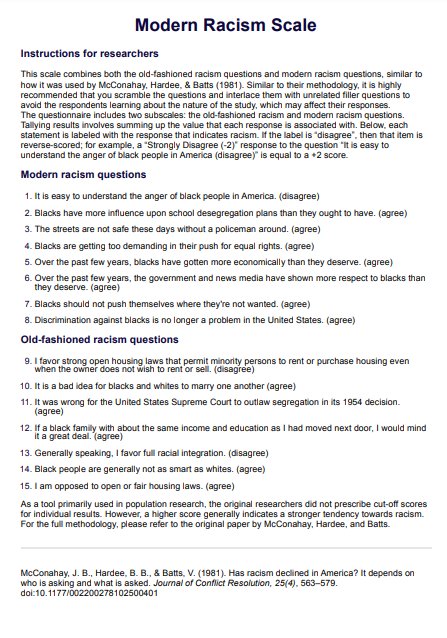
Modern racism, as defined by McConahay et al. in 1981, represents a form of prejudice that diverges from overt discrimination, instead presenting subtly and often masked in everyday interactions. Unlike traditional, explicit racism, modern racism manifests through ambivalence, a rejection of overtly racist behaviors while maintaining negative racial attitudes internally. This form of prejudice often includes denying structural inequalities or expressing resentment toward policies intended to promote racial equality. In 2024, modern racism can encompass aversive racism, microaggressions, and implicit biases, often emerging as indirect racial prejudice rather than blatant hostility.
Modern racists may deny racial discrimination or perceive programs that promote racial equality as “unnecessary,” reflecting a belief that racism is no longer an issue. These attitudes can have long-term effects, contributing to systemic inequality, perpetuating racial prejudice, and influencing decisions in workplaces, educational institutions, and public policies. Recognizing modern racism, whether as perceived discrimination or as a reflection of one’s own biases, plays a crucial role in promoting equality and inclusivity. Importantly, identifying and addressing these subtle forms of discrimination can empower individuals to recognize and mitigate the effects of racial attitudes.
Identifying and acknowledging modern racism, in oneself or others, requires a deeper awareness of how perceived racism impacts mental health, social relationships, and professional environments. Healthcare professionals and social scientists studying racial discrimination often use the Modern Racism Scale to understand these subtle biases and develop strategies to address and reduce their effects, thereby promoting more inclusive environments.









