









What is Meniere's disease?
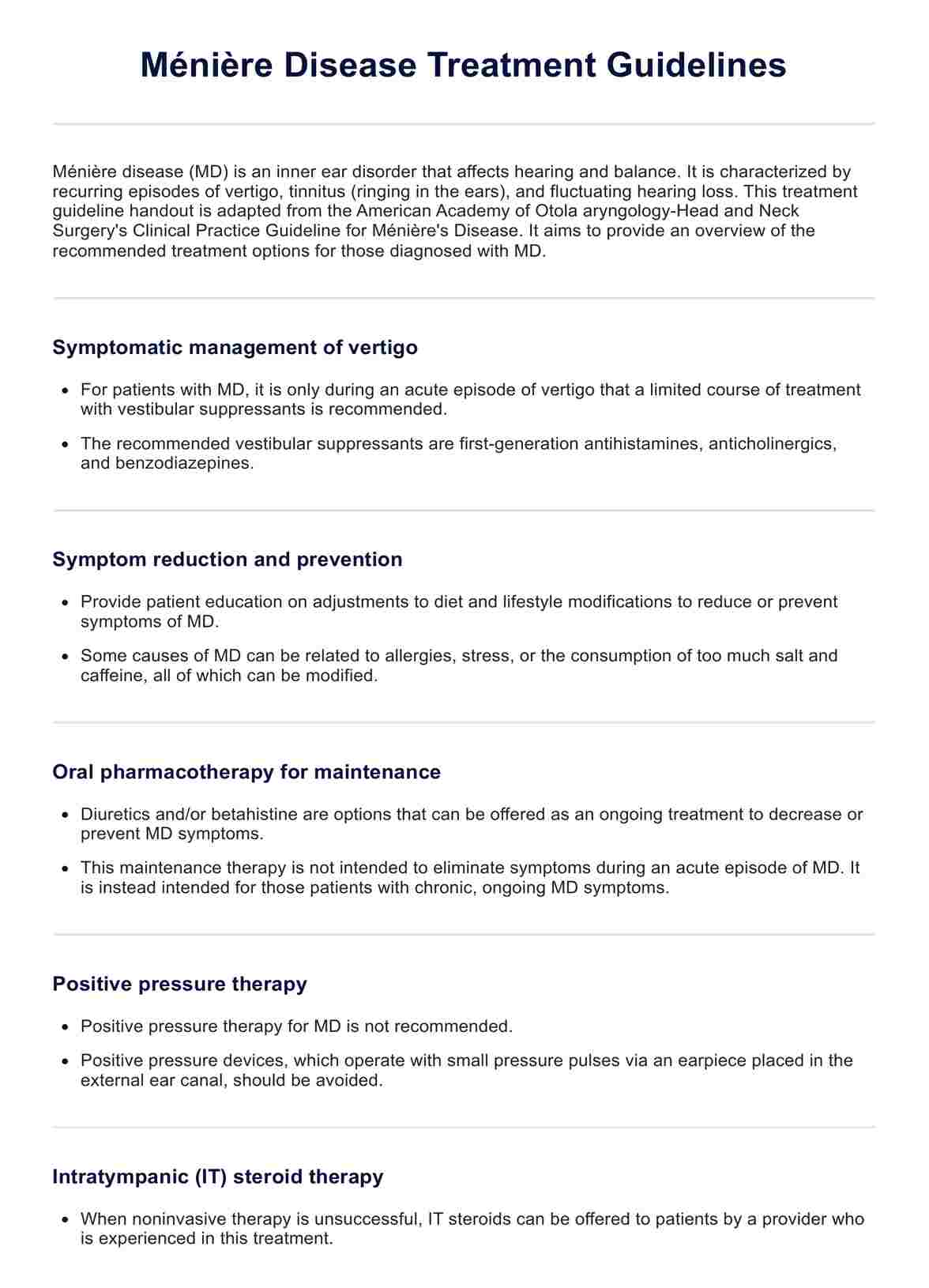
Meniere's disease is a chronic disorder affecting the inner ear, responsible for hearing and balance. This condition is characterized by a recurrent vertigo attack, fluctuating hearing loss, tinnitus (ringing in the ears), and a feeling of fullness or pressure in the affected ear. The exact cause of Meniere's disease is not fully understood, but it is believed to be related to abnormal inner ear fluid levels. This fluid, known as endolymph, can build up in the inner ear and interfere with normal auditory and vestibular nerve function, leading to the symptoms of the disease.
Individuals with Meniere's disease may experience periods of intense vertigo attacks, which can be debilitating and last for several hours. Over time, the condition can lead to permanent hearing loss, making early diagnosis and management crucial. Diagnosis often involves a hearing test conducted by a hearing specialist, who will assess the extent of hearing loss and evaluate inner ear function.
In severe cases, surgical options such as a vestibular nerve section may be considered to alleviate vertigo symptoms. Managing Meniere's disease effectively requires a comprehensive approach, often involving communication disorders and otolaryngology specialists.
Symptoms of Meniere's disease
Meniere's disease manifests through various symptoms that can significantly impact a person's daily life. These symptoms often occur in episodes and can vary in intensity. Here are the primary symptoms of Meniere's disease:
- Vertigo: Sudden, severe spinning sensations that can last from minutes to hours, often accompanied by nausea and vomiting.
- Hearing loss: Fluctuating hearing loss, particularly affecting low frequencies, which may become permanent over time.
- Tinnitus: Ringing, buzzing, or roaring sounds in the affected ear.
- Aural fullness: A feeling of pressure or fullness in the affected ear.
- Balance problems: Difficulty maintaining balance, especially during vertigo attacks.
- Nystagmus: Rapid, involuntary eye movements that may occur during vertigo episodes.
- Drop attacks: Sudden falls without loss of consciousness, also known as Tumarkin's otolithic crisis.
These symptoms can vary in frequency and severity, making Meniere's disease a challenging condition to manage. Early recognition and treatment are essential to mitigate the impact on the individual's quality of life.
Causes of this disease
The exact cause of Meniere's disease remains unknown, but it is believed to result from a combination of factors that affect the inner ear. One primary factor is the abnormal accumulation of inner ear fluid, known as endolymph, which can disrupt the ear's balance and hearing functions.
Potential contributing factors include genetic predisposition, autoimmune reactions, allergies, viral infections, and improper fluid drainage from the middle ear.
These elements may interact to affect inner ear fluid and pressure, leading to the characteristic symptoms of Meniere's disease. Further research is ongoing to understand the underlying mechanisms of this condition better.
How is Meniere's disease detected?
Meniere's disease is detected through patient history, clinical evaluation, and diagnostic tests. A hearing specialist will conduct a comprehensive hearing test to assess hearing loss patterns typical of Meniere's. Balance tests, such as electronystagmography (ENG) or videonystagmography (VNG), evaluate inner ear nose function and vestibular nerves integrity. Imaging studies like MRI may be used to rule out other conditions.
Additionally, medical history and symptom descriptions, including a vertigo attack, tinnitus, and aural fullness, help diagnose the disease. Accurate detection often requires collaboration among audiologists, otolaryngologists, and other healthcare professionals.









