





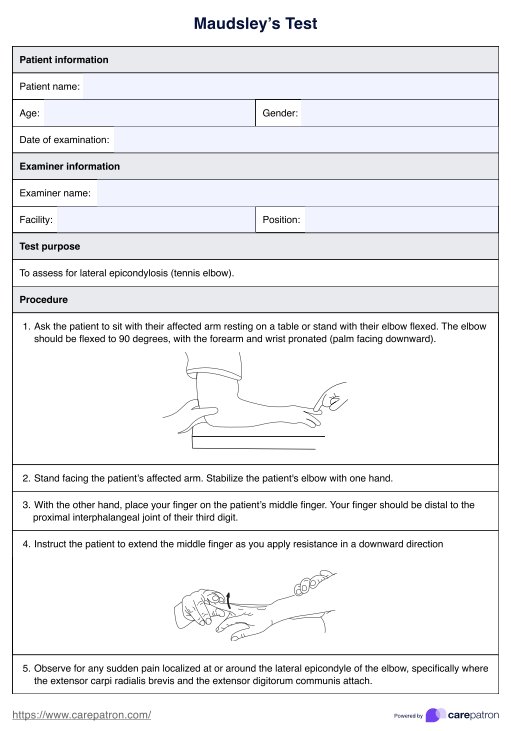




What is Maudsley's Test?
Maudsley's Test, also known as the resisted-middle-finger-extension test, is a specific diagnostic maneuver used to identify lateral epicondylosis (sometimes called lateral epicondylitis). More commonly known as tennis elbow, this condition affects the tendons attached to the lateral epicondyle of the elbow, particularly the extensor carpi radialis brevis and the extensor digitorum communis.
Maudsley's Test explicitly targets the extensor digitorum communis slip muscle group, which shares a common extensor tendon with other wrist and finger extensors. A positive result is indicated by the elicitation of sudden pain at the lateral elbow, particularly over the patient's lateral epicondyle, when the middle finger is extended against resistance. This pain suggests explicit damage to the extensor digitorum communis and related extensor muscle slips, which are stressed during the test.
The test is valued for its diagnostic accuracy in confirming lateral elbow tendinopathy. It's one of several examination tests used to diagnose elbow injuries and is often used in a comprehensive physical examination. Maudsley's Test can help differentiate lateral epicondylosis from other conditions, such as radial nerve entrapment. The test's ability to isolate specific muscle actions and pinpoint pain helps confirm the diagnosis and guide treatment evaluation.
Positive results from Maudsley's Test help in formulating targeted treatments for tennis elbow. Understanding the specific anatomical damage enhances conservative and surgical management, improving patient outcomes. Further research into the anatomical and clinical findings associated with the test could refine its utility, improving sensitivity and specificity in diagnosing tennis elbow and similar conditions.









