Factors that influence a marriage
Marital success does not depend solely on one factor. Based on the lived experiences of successful married individuals, premarital psychological and social factors significantly influence marital success, including responsibility, emotional maturity, flexibility, optimism, commitment, intimacy, financial management, realistic expectations, and respectful communication with families of origin (BahadorMotlagh et al., 2024).
Furthermore, the dynamic goal theory of marital satisfaction posits that marital goals evolve over the lifespan. This impacts satisfaction based on their achievement. Communication patterns and cultural values also play crucial roles in prioritizing and achieving these goals (Li & Fung, 2011).
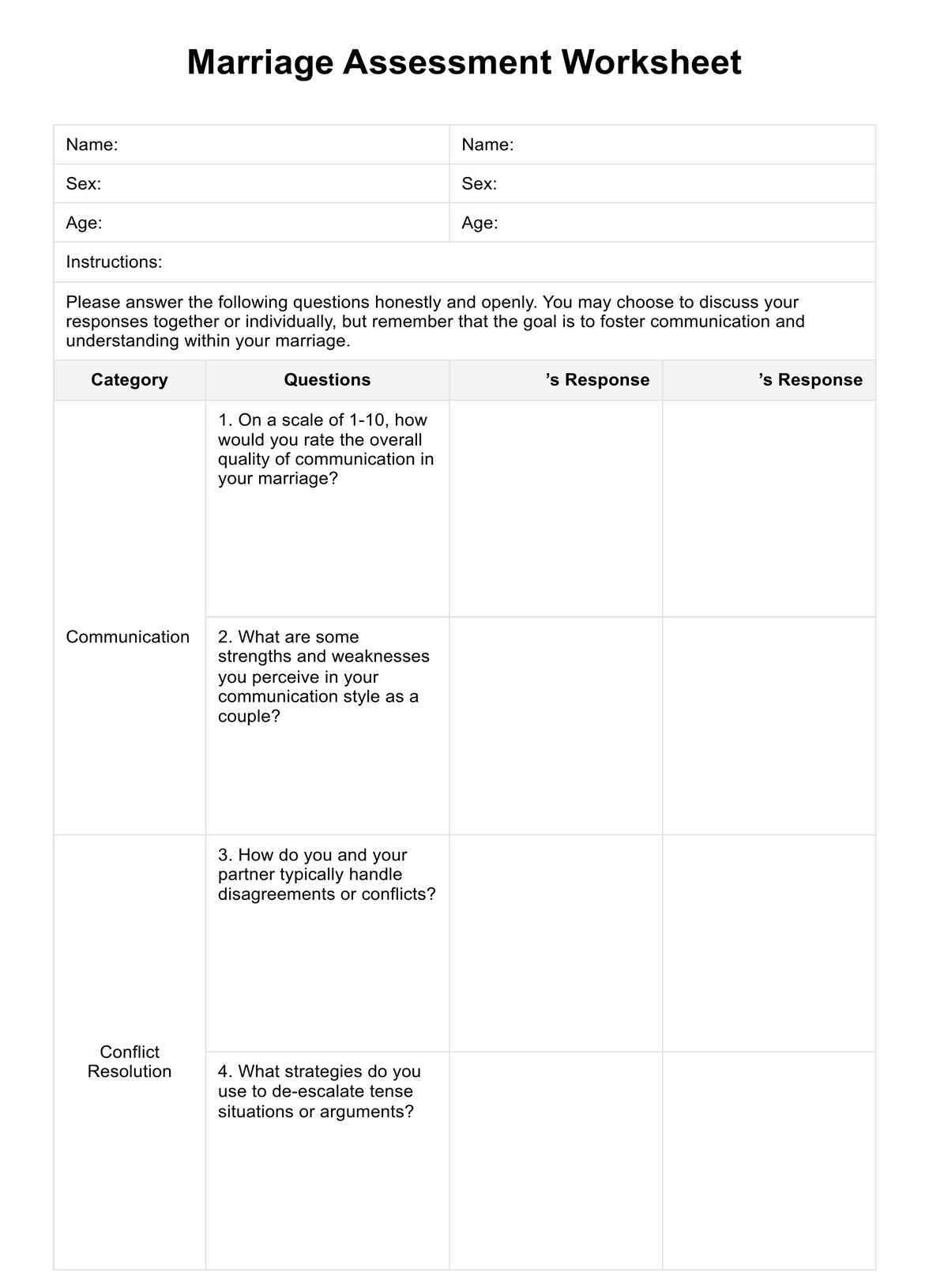
Based on these studies, we've selected salient themes or areas and included them in our worksheet for couples to explore and focus on. This will help them develop the skills to navigate their marriage's evolving dynamics and enhance long-term satisfaction. Here are these seven areas or factors that can influence a marriage.
1. Communication
Effective communication is the foundation of a healthy marriage. It involves expressing thoughts and feelings clearly and listening actively and empathetically to your partner. For instance, discussing daily events, sharing dreams, and resolving misunderstandings through open dialogue can strengthen the bond between spouses.
2. Conflict resolution
Every marriage encounters conflicts, but how couples handle these disagreements can make or break their relationship. When partners are emotionally mature, they can listen to each other's perspectives, manage their emotions effectively, and find constructive solutions without resorting to hostility or defensiveness.
3. Intimacy and connection
Intimacy goes beyond physical affection. It encompasses emotional closeness and a deep connection. This can be nurtured through small gestures like holding hands, spending quality time together, and sharing personal thoughts and feelings. Building intimacy might also involve trying new activities together or maintaining traditions that bring you closer.
4. Roles and responsibilities
Setting realistic expectations is crucial in defining roles and responsibilities within a marriage. Moreover, by establishing clear agreements on household chores and financial duties, couples can prevent conflicts and ensure mutual support. For example, recognizing each partner's strengths and preferences, such as one enjoying cooking while the other prefers cleaning, can lead to a more balanced division of labor in the household.
5. Financial management
Money matters are a common source of tension in marriages, so effective financial management is crucial. This involves budgeting, saving, and making joint decisions about significant expenses to ensure both partners are on the same page. Couples might set financial goals together, like saving for a house or retirement planning to build a secure future.
6. Family and social life
Balancing time between your partner, family, and friends is vital for a well-rounded marriage. This means respecting each other's family ties and social networks while creating a shared social life. For example, attending family gatherings and having mutual friends can enhance your connection and support system.
7. Future and goals
Marriage goals, like personal growth, companionship, and practical aims, change as people age. When couples share dreams, like having kids or planning their careers, it brings them closer and gives them direction. Checking in on these goals regularly helps them stay relevant and achievable.