





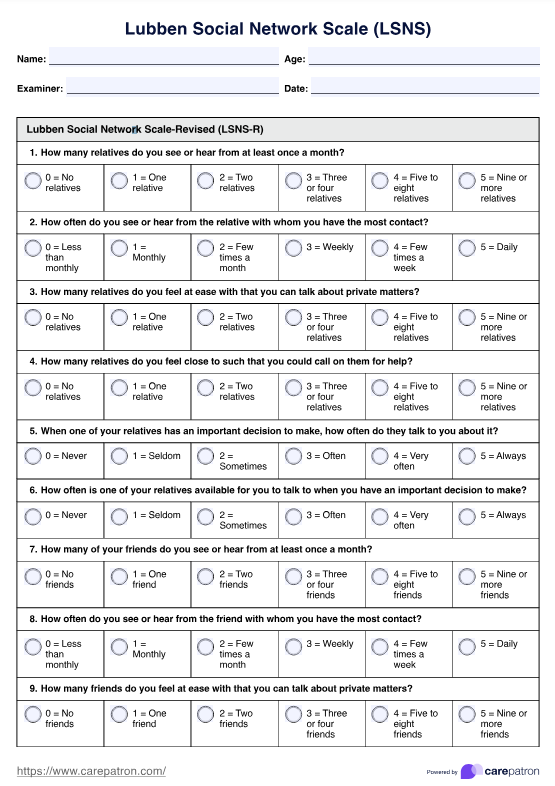




What is the Lubben Social Network Scale?
The Lubben Social Network Scale (LSNS) is a tool designed to measure the social networks of older adults, assessing the size, closeness, and frequency of contact within their social network. This scale is crucial in identifying older adults at risk of social isolation, which is increasingly recognized as a significant health and well-being issue.
Developed to gauge social isolation and facilitate late-life health, the LSNS provides insights correlating with social and health indicators, making it a valuable resource in social and behavioural sciences research, as well as clinical settings. It highlights the importance of social connections in maintaining health, particularly among the elderly.
The LSNS operates on a series of questions covering familial and friendship ties, quantifying respondent's social network and perceived support level. This helps identify individuals who might benefit from interventions to reduce isolation and improve social integration.
Versions of the LSNS
The Lubben Social Network Scale has several versions tailored to different research and clinical needs. These include the LSNS-R, LSNS-6, and LSNS-18.
- LSNS-R: The revised version focuses on detailed aspects of social interaction and support within both family and friendship networks, but doesn't differentiate neighbors from friends.
- LSNS-6: A shorter version with only six questions designed for quicker assessments while maintaining reliability.
- LSNS-18: The most comprehensive version, including eighteen questions that cover family, friends, and neighbors to provide a thorough analysis of social networks.
How is each LSNS version scored?
All the Lubben Social Network Scale versions scores involve an equally weighted sum of responses to several items that ask about the number of people the respondent feels close to, the number they can call on for help, and the number they interact with at least once a month. The responses are typically on a scale from 0 (none) to 5 (nine or more contacts), with higher scores indicating larger, more robust social networks. Here are the cutoffs for each one (Lubben et al., 2006):
- LSNS-R: A score below 30 suggests social isolation.
- LSNS-6: A score below 12 suggests social isolation.
- LSNS-18: A score below 45 suggests social isolation.
Next steps after using this scale
After summing up a respondent's LSNS score, healthcare providers can start to tailor interventions. Recommendations might include encouraging participation in community engagement activities, connecting individuals to support groups, or directing them to mental health services, all aimed at enhancing perceived social support and improving quality of life.









