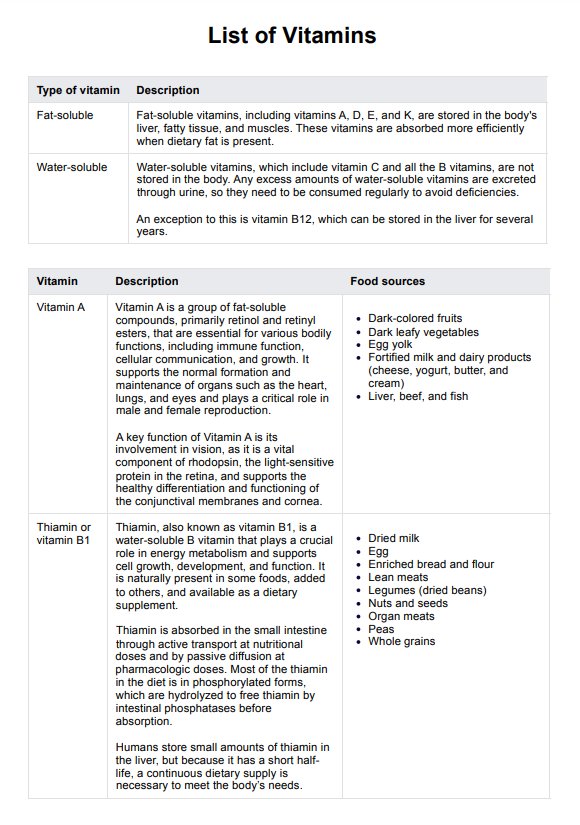
List of essential vitamins
Vitamins can be classified into two groups: fat-soluble and water-soluble. Fat-soluble vitamins (A, D, E, and K) are stored in the body and require fat for absorption, while water-soluble vitamins (C and the B vitamins) are not stored and must be replenished regularly through diet or supplementation (Manetti, 2023). Below is a list of essential vitamins and their roles in the body (National Health Institute, 2017):
Vitamin A
Vitamin A is a fat-soluble vitamin that plays a critical role in immune function, cellular communication, and the growth and development of various organs. It is essential for vision, as it is a key component of rhodopsin, the light-sensitive protein in the retina, and supports the normal function of the conjunctival membranes and cornea.
Thiamin (Vitamin B1)
Thiamin is a water-soluble B vitamin that is crucial for energy metabolism and the proper functioning of cells. It is absorbed by the small intestine and plays a key role in the metabolism of carbohydrates, helping to convert glucose into energy. Thiamin is stored in small amounts in the liver, and its deficiency can lead to diseases like beriberi.
Riboflavin (Vitamin B2)
Riboflavin is a water-soluble B vitamin that is essential for energy production and the metabolism of fats, drugs, and steroids. It is a component of the coenzymes flavin mononucleotide (FMN) and flavin adenine dinucleotide (FAD), which are critical in cellular processes. Riboflavin also helps maintain normal homocysteine levels and supports the conversion of tryptophan to niacin.
Niacin (Vitamin B3)
Niacin is a water-soluble B vitamin that is involved in the production of nicotinamide adenine dinucleotide (NAD), a coenzyme required by more than 400 enzymes in the body. These enzymes play a significant role in metabolic processes. Niacin is also essential for the conversion of amino acids and supports cellular energy production.
Pantothenic acid (Vitamin B5)
Pantothenic acid is a water-soluble B vitamin critical for synthesizing coenzyme A (CoA), which is vital for fatty acid metabolism. CoA is involved in a wide range of anabolic and catabolic processes, while acyl carrier protein, which is also produced by pantothenic acid, plays a central role in fatty acid synthesis.
Vitamin B6
Vitamin B6 is a water-soluble vitamin that consists of six vitamers. It is required for amino acid metabolism, the formation of neurotransmitters, and the conversion of stored glycogen into glucose. The active coenzyme forms of vitamin B6 are pyridoxal 5’-phosphate (PLP) and pyridoxamine 5’-phosphate (PMP), which are crucial for enzyme activity.
Biotin (Vitamin B7)
Biotin is a water-soluble B vitamin that acts as a cofactor for carboxylases involved in the metabolism of fatty acids, glucose, and amino acids. It plays an important role in gene regulation, cell signaling, and histone modifications. Biotin is absorbed in its free form after enzymatic breakdown of protein-bound biotin in the gastrointestinal tract.
Folate (Vitamin B9)
Folate is a water-soluble vitamin essential for DNA synthesis, cell division, and growth. It is found in its polyglutamate form in foods and is converted into folic acid, the monoglutamate form, in supplements. Folate is crucial for the proper development of the nervous system and for preventing neural tube defects during pregnancy.
Vitamin B12
Vitamin B12, also known as cobalamin, is a water-soluble vitamin involved in the metabolism of fatty acids and amino acids. It is crucial for DNA synthesis, nerve function, and the production of red blood cells. The active forms of vitamin B12 are methylcobalamin and 5-deoxyadenosylcobalamin, which are used in a variety of cellular processes.
Vitamin C
Vitamin C, also known as L-ascorbic acid, is a water-soluble vitamin essential for the biosynthesis of collagen, L-carnitine, and certain neurotransmitters. It acts as an antioxidant and is involved in the regeneration of other antioxidants, such as vitamin E. It also supports immune function and enhances the absorption of nonheme iron.
Vitamin D
Vitamin D is a fat-soluble vitamin that is essential for calcium and phosphate regulation, which supports bone health. It is synthesized by the body when exposed to sunlight and is also available from dietary sources and supplements. Vitamin D must undergo two hydroxylation steps to be activated, with the final active form being calcitriol.
Vitamin E
Vitamin E is a fat-soluble vitamin known for its antioxidant properties. It exists in eight forms, with alpha-tocopherol being the most active form in humans. Vitamin E protects cells from oxidative stress by neutralizing free radicals and plays a role in immune function and skin health.
Vitamin K
Vitamin K is a fat-soluble vitamin important for blood clotting and bone metabolism. It exists in two main forms: phylloquinone (K1), found in plants, and menaquinones (K2), found in animal products and fermented foods. Vitamin K is involved in the activation of clotting factors and proteins that regulate calcium in bones and blood vessels.