









What is the Klisic Test?
Developmental dysplasia refers to a spectrum of hip joint abnormal development in newborns where the femoral head does not properly fit into the hip socket. This condition can manifest as limited hip abduction, where the infant’s legs cannot spread out to the sides as expected. Sometimes, the misalignment arises due to inadequate femoral head coverage of the socket, leading to mild hip instability or even a fully dislocated hip if left untreated. In some cases, neuromuscular hip dysplasia occurs when underlying neurological issues affect muscle tone and joint formation. The proximal femur and femoral neck regions are crucial in forming a stable ball-and-socket structure, and when stability is compromised, the child may experience long-term mobility challenges.
Common risk factors include family history, breech presentation, and conditions affecting connective tissues. Over time, untreated developmental dysplasia may contribute to joint pain, walking difficulties, and early hip osteoarthritis, making early detection critical.
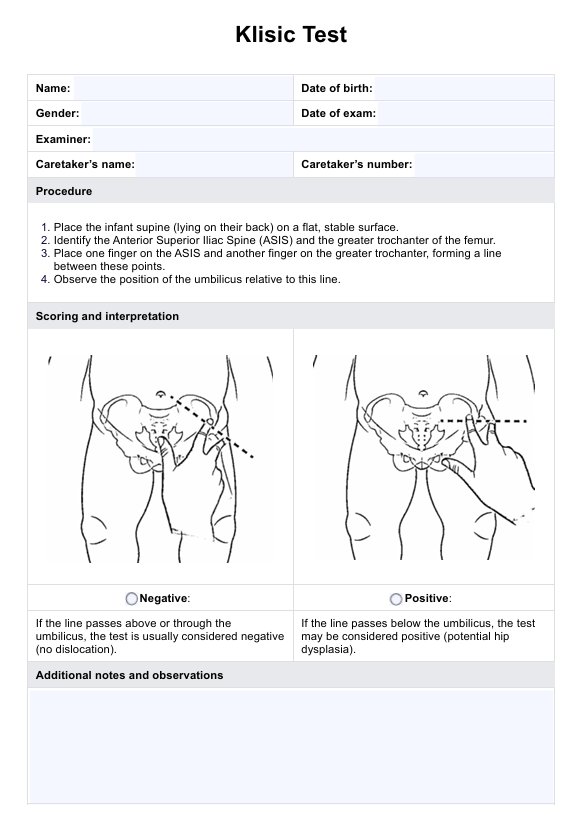
The Klisic Test is one clinical examination technique designed to evaluate for developmental dysplasia. Developed by Predrag Klisic, this test assists healthcare professionals in determining if the hip structures are properly aligned or if there is an underlying problem. By comparing anatomical landmarks, the examiner can discern whether the hip joint is stable or if subtle signs of instability exist. While the Klisic Test is considered useful, its reliability often depends on the examiner’s skill and experience. More practiced professionals can better interpret subtle findings, improving the test’s diagnostic accuracy.
In essence, the Klisic Test contributes to the early detection of developmental dysplasia, enabling timely interventions to ensure proper hip development and minimize long-term complications.









