What are the theories that inform Jungian psychology?
Jungian psychology is informed by several key theories and ideas that together construct a comprehensive view of the human psyche:
The theory of the collective unconscious
At the heart of Jungian psychology lies the theory of the collective unconscious, a groundbreaking concept introduced by Jung. He posited that beyond the personal unconscious, filled with forgotten or repressed individual experiences, a deeper layer exists shared among all humans. This collective unconscious is not acquired but inherited, containing the universal archetypes that are the psychic counterpart of instinct. These archetypes, such as the Shadow, the Anima and Animus, and the Self, are manifested through dreams, fantasies, and myths, influencing our behaviors and shaping our collective and personal narratives.
Archetypes
Archetypes are the core components of the collective unconscious, acting as psychic blueprints for human thought and behavior. These universal, inherited patterns are not consciously known but influence our lives profoundly. Archetypes manifest in literature, art, religion, and dreams, revealing commonalities shared across human cultures. Jung identified several primary archetypes, including the Persona (the mask we present to the world), the Shadow (our darker, unconscious self), the Anima and Animus (the feminine aspect within men and the masculine aspect within women, respectively), and the Self (the unification of consciousness and unconsciousness in an individual).
Psychological types
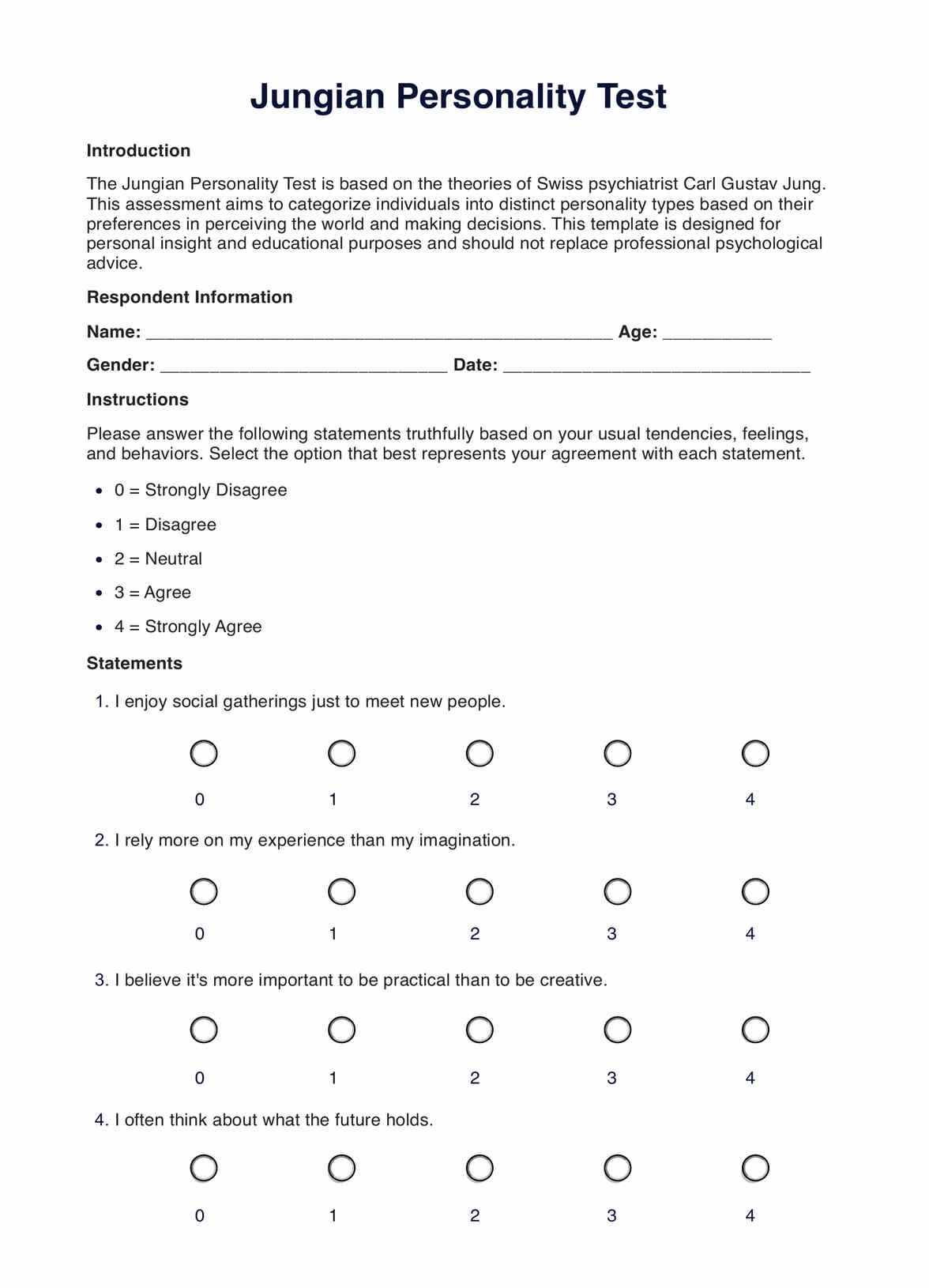
Jung's theory of psychological types introduced the idea that individuals could be categorized based on their preferred ways of perceiving the world and making decisions. He distinguished between two perceptive functions (sensation and intuition) and two judging functions (thinking and feeling), which combine with attitudes of introversion and extraversion to form various psychological types. This theory laid the groundwork for the Myers-Briggs Type Indicator (MBTI), a widely used personality assessment tool.
The process of individuation
Individuation is the process of becoming aware of oneself, integrating the conscious and unconscious aspects of the person and psyche, and developing a unique, individual identity. It is considered the central process of human development in Jungian psychology. Through individuation, an individual can achieve self-realization and wholeness, acknowledging and incorporating the shadow aspects of the self and realizing the potential of their archetypes.
Synchronicity
Jung's theory of synchronicity challenges the conventional notions of causality, proposing that events are connected through meaning rather than cause and effect. Synchronicity occurs when an external event coincides with an internal state or thought in a meaningful way to the individual despite the lack of a causal connection. This concept suggests a deeper, underlying order to the universe, where the psyche and the material world are interconnected.
Together, these theories offer a rich tapestry for understanding the complexities of the human psyche, providing valuable insights into our behaviors, feelings, relationships, and the symbolic dimensions of our lives. Jungian psychology continues to influence various fields, including psychology, art, literature, and spiritual studies, offering a profound framework for exploring the depths of human experience.