





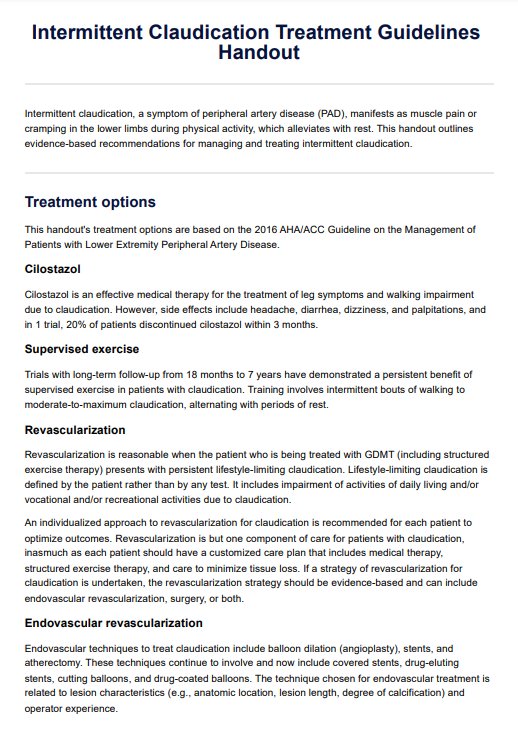




What is intermittent claudication?
Intermittent claudication is a symptom of peripheral artery disease (PAD) characterized by pain and cramping in the lower limbs during physical activity, such as walking, which subsides with rest. This pain results from reduced blood flow due to narrowed or blocked arteries. Blood vessels in the legs are primarily affected, leading to insufficient oxygen supply to the muscles. Peripheral arterial disease shares risk factors with coronary artery disease, such as high blood pressure and smoking.
Poor blood flow in PAD is often due to atherosclerosis, where plaque builds up in the arteries. This condition also increases the risk of blood clots, further obstructing blood flow. High blood pressure exacerbates this issue by putting additional strain on the arterial walls. Early diagnosis and management of intermittent claudication are crucial to preventing severe complications, such as critical limb ischemia. Treatment typically involves lifestyle modifications, medications to improve blood flow and lower blood pressure, and, in severe cases, surgical interventions to restore adequate blood flow. Regular monitoring and proactive management are essential in patients with PADF.









