









What is insomnia disorder?
There are some instances when an individual cannot sleep at night. While it can be inevitable, it can be pretty concerning when it becomes frequent because poor sleep can significantly affect one's function, leading to fatigue, impaired performance, and excessive daytime sleepiness, among many others. Determining when sleep difficulty occurs is essential because a client might manifest insomnia symptoms.
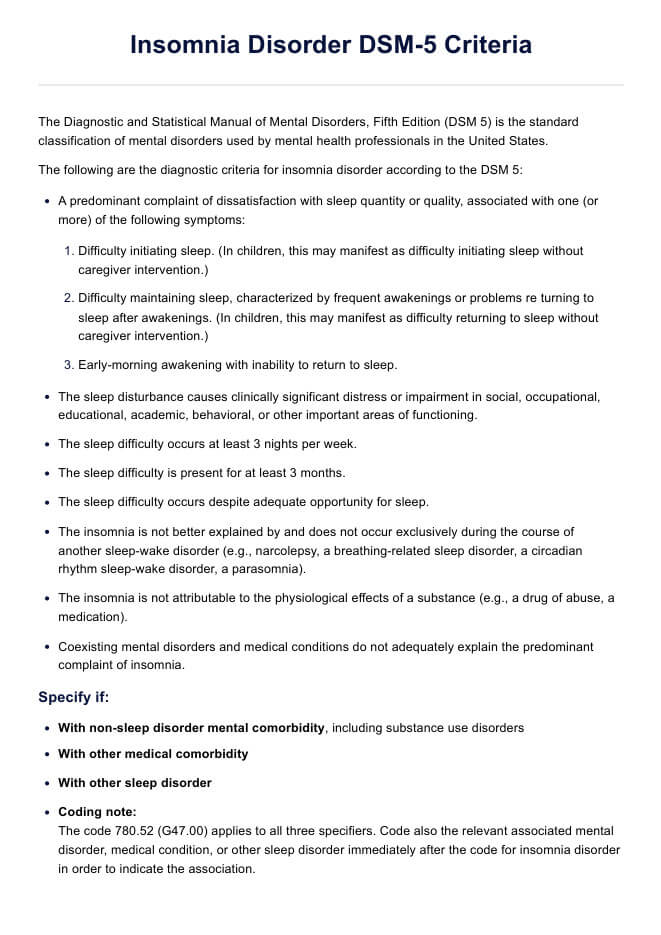
The Diagnostic and Statistical Manual of Mental Disorders, Fifth Edition (DSM 5) by the American Psychiatric Association classifies insomnia disorder under sleep-wake disorders along with hypersomnolence disorder, narcolepsy, breathing-related sleep disorder, circadian rhythm sleep disorder, non-rapid eye movement (NREM) sleep arousal disorders, nightmare disorder, rapid eye movement (REM) sleep behavior disorder, restless legs syndrome, and substance/medication-induced sleep disorder.
Insomnia disorder affects about a third of the general population in the United States, with more prevalence among females. The International Classification of Sleep Disorders, Third Edition (ICSD-3) by the American Academy of Sleep Medicine classifies insomnia into three: chronic insomnia disorder, short-term insomnia disorder, and other insomnia disorder (Kaur et al., 2023). Causes of insomnia include temperamental, environmental, genetic, and physiological factors, and understanding them is necessary to enhance sleep quality and identify sleep difficulties to help you provide your client with the best quality of care.









