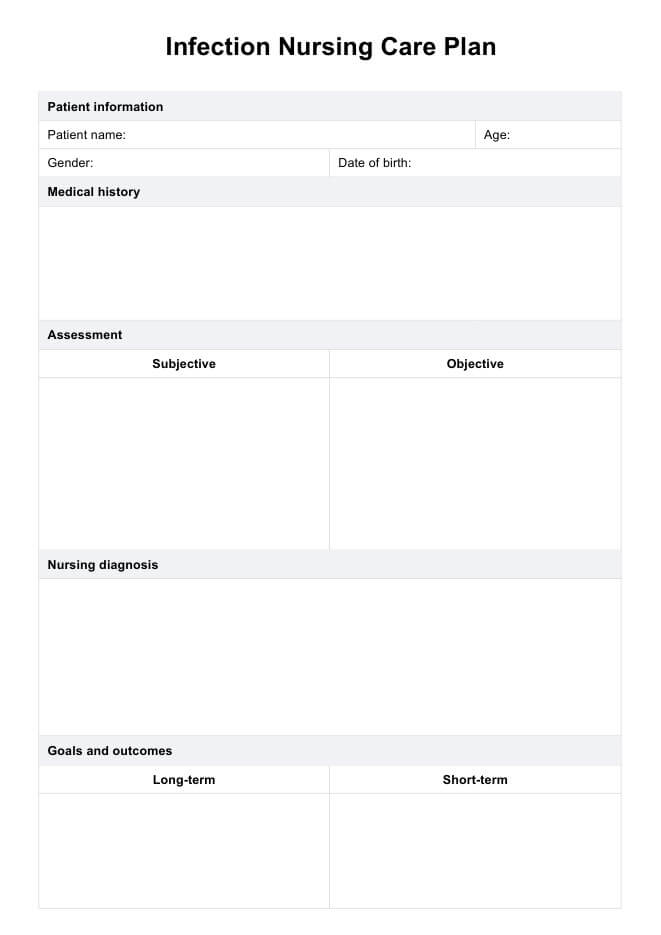
Components of an effective infection nursing care plan
When addressing a specific condition such as a respiratory tract infection, urinary tract infection, or surgical site infection, an Infection Nursing Care Plan Template can be used as a guide to identify interventions and monitor the patient's response.
Here are the components of an effective infection nursing care plan:
Assessment
This is the first step in developing a care plan and involves gathering information about the patient's current health status, including any existing infections or the patient's specific risk factors for infections. It also includes assessing the patient's immune system function, white blood cell count, mucous membranes, and other relevant systems.
Nursing diagnosis
Based on the assessment findings, specific nursing diagnoses related to infection can be identified. Some common nursing diagnoses related to infection may include risk for infection, impaired skin integrity, altered oral mucous membrane, and ineffective breathing patterns. The diagnosis should also specify if the condition is due to wound infection, respiratory infections, and other serious infections.
Goals and outcomes
Setting specific, measurable, attainable, and time-bound (SMART) goals is crucial in guiding care plans, especially for patients at risk of bacterial infections, including respiratory and urinary tract infections. It's important to identify desired outcomes to assess the effectiveness of the care plan and make necessary adjustments.
Interventions
Interventions are actions taken by the nurse to prevent or manage infections. These may include administering antibiotics, providing wound care, maintaining proper hygiene practices, putting infection prevention measures in place, monitoring vital signs and symptoms, and educating the patient on infection prevention strategies. Additionally, implementing patient education as an intervention can play a vital role in managing various types of infection, especially healthcare-associated infections and systemic inflammatory response syndrome.
Rationale
The rationale for each intervention should be clearly stated to provide a scientific basis for the chosen actions. This helps ensure evidence-based practice and effective infection control measures. For example, administering antibiotics is based on the principles of microbial resistance and targeting specific bacteria causing the infection. Wound care interventions aim to promote healing and prevent further spread of infections.
Evaluation
Evaluation involves assessing if the desired outcomes have been achieved and if the interventions were effective in preventing or managing the infection. This step also provides an opportunity to identify any potential barriers to achieving desired outcomes and make necessary adjustments to the care plan.