





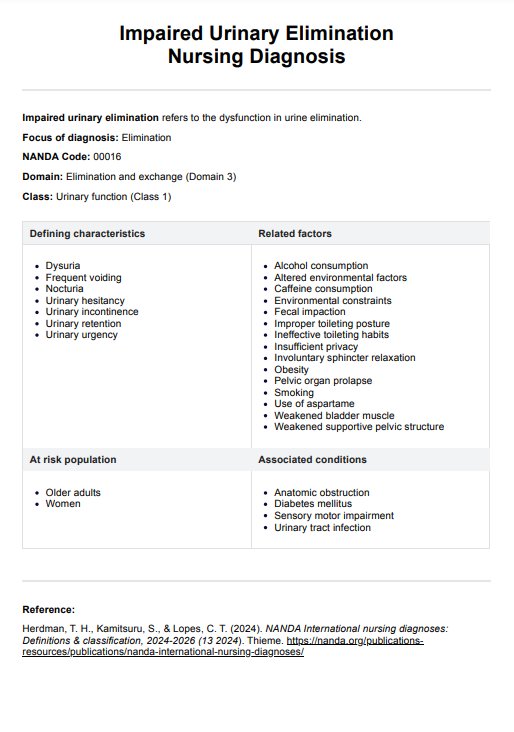




What is impaired urinary elimination?
Impaired urinary elimination refers to difficulty or disruptions in the body’s normal process of voiding urine. This condition often affects bladder function and leads to complications like urinary incontinence and urinary retention. This issue can arise from spinal cord injuries, UTIs, bladder dysfunction, medications, pelvic wounds, cognitive impairments, or renal diseases, all impacting bladder function and overall health. When bladder function is compromised, it can result in bladder distention and decreased urine output, often causing significant discomfort and potential risks for urinary tract infection.
Urinary retention is common in these cases, where urine builds up, increasing bladder distention and possibly leading to bladder irritation. Recurrent urinary tract infections can exacerbate symptoms and further impair bladder function. For many patients, impaired urinary elimination calls for a targeted treatment plan involving pelvic floor exercises to strengthen support structures and reduce urinary incontinence. Supporting patients in managing impaired urinary elimination is vital for improving their overall quality of life.
Symptoms of impaired urinary elimination
Impaired urinary elimination can present symptoms that disrupt normal bladder function, impacting patient well-being and daily activities. Recognizing these signs is critical for healthcare professionals to provide timely and effective interventions. Below are some of the most common symptoms associated with impaired urinary elimination:
- Urinary incontinence: Involuntary urinary leakage can range from mild to severe, impacting quality of life.
- Urinary retention: Incomplete bladder emptying, often resulting in frequent, small urine output.
- Bladder distention: Noticeable swelling in the lower abdomen due to accumulated urine in the bladder.
- Frequent urinary tract infections: While also noted as one of the causes, this recurrent infection indicates potential underlying bladder dysfunction.
- Bladder irritation: Symptoms may include pain, burning, or urgency during urination.
- Reduced urine output: A marked decrease in urine produced, signaling potential underlying conditions.
Properly diagnosing impaired urinary elimination, including specific issues like stress urinary incontinence or reflex urinary incontinence, empowers practitioners to improve patient care through evidence-based methods like bladder training.









