









What is hypothyroidism?
Hypothyroidism, or an underactive thyroid, occurs when the thyroid gland fails to produce enough thyroid hormones. This leads to a slowed metabolism and symptoms such as weight gain, fatigue, and cold intolerance.
Management of hypothyroidism typically involves lifelong thyroid medications, specifically synthetic hormone replacement therapy with levothyroxine, to restore normal levels and alleviate symptoms. Regular blood tests are essential for monitoring thyroid hormone levels and adjusting medication dosages. In some cases, iodine deficiency may contribute to hypothyroidism, making dietary adjustments important.
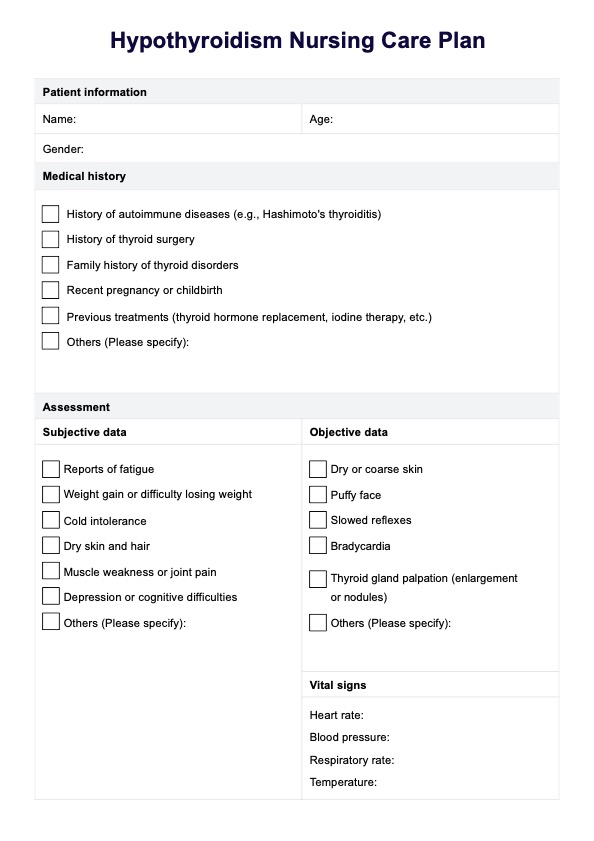
Patients with autoimmune thyroiditis, a common cause of hypothyroidism, may need tailored treatment approaches. A diet rich in iodine, regular exercise, and stress management are also recommended. Ongoing follow-ups with healthcare providers are crucial for tracking progress and preventing complications. A structured nursing care plan helps monitor symptoms and ensure treatment adherence.
Types of hypothyroidism
There are four primary types of hypothyroidism, each distinguished by its underlying cause and the way it affects the body’s ability to produce and regulate thyroid hormones:
- Primary hypothyroidism: The most common form, caused by issues with the thyroid gland itself.
- Secondary hypothyroidism: Results from problems with the pituitary gland, which controls the release of thyroid-stimulating hormone (TSH).
- Tertiary hypothyroidism: This is caused by issues with the hypothalamus, which affects the release of TSH.
- Congenital hypothyroidism: Present at birth, usually due to an underdeveloped or absent thyroid gland.
Common symptoms
Symptoms of hypothyroidism often develop slowly and may take years to become noticeable. Common first signs and symptoms include:
- Unexplained weight gain
- Persistent fatigue
- Cold intolerance
- Dry skin
- Constipation
- Depression
- Muscle weakness or soreness
- Joint pain or stiffness
- Thinning hair
- Slowed heart rate
- Irregular or heavy menstrual periods
- Impaired memory or concentration
These symptoms can vary in severity depending on the individual’s thyroid hormone levels.









