Treatment for herpes gladiatorum
The herpes simplex virus type 1 has an incubation period of 3-14 days, meaning people are typically infectious before they develop symptoms and realize they have herpes gladiatorum. Once it is active, mat herpes often requires medical intervention to manage. Here are some common treatments:
Initial care
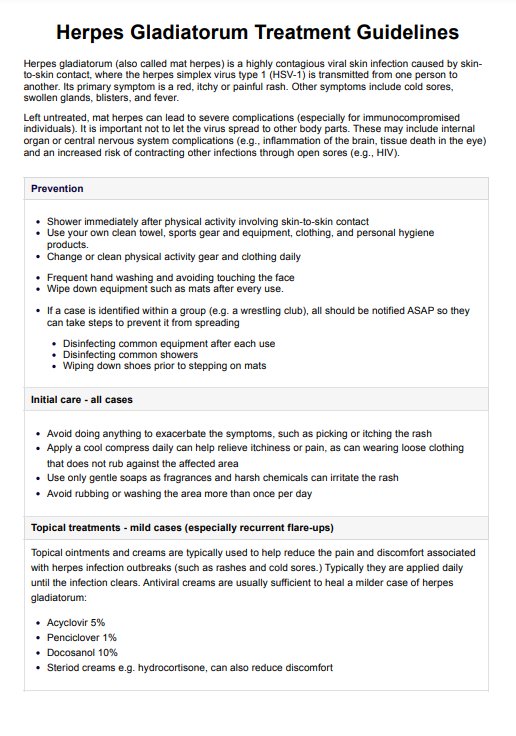
When outbreaks of herpes gladiatorum occur, it is best to avoid doing anything to exacerbate the symptoms such as picking or itching the rash. Applying cool compresses daily can help relieve itchiness or pain, as can wearing loose clothing that does not rub against the affected area. Mild recurrent cases of herpes gladiatorum may resolve on their own within days or weeks.
Topical treatments
Topical ointments and creams are typically used to help reduce the pain and discomfort associated with herpes infection outbreaks (such as rashes and cold sores.) Typically they are applied daily until the infection clears. Antiviral creams are usually sufficient to heal a milder case of herpes gladiatorum.
They may include antiviral ointments containing acyclovir, penciclover or docosanol. Topical steroids such as hydrocortisone can also help reduce pain and discomfort.
Antiviral treatment
A more severe herpes gladiatorum infection is typically treated with antiviral medication, which works by preventing the herpes simplex virus from replicating itself, thus reducing associated symptoms. Antiviral treatments are especially recommended for the primary outbreak of herpes viruses. Commonly prescribed oral antivirals include acyclovir, valacyclovir, and famciclovir.
Suppressive therapy refers to treatment in which antiviral drugs are taken every day to reduce the frequency of outbreaks over time. Episodic therapy involves taking them for a few days at the first symptoms to clear an individual breakout. Early exposure to oral antiviral medication helps decrease the severity of the outbreak and minimize the frequency of future reactivations.
Ongoing management
There are several factors that may exacerbate or trigger a flare up of HSV 1, including stress, hormone imbalance, UV exposure, emotional distress, and immunosuppression. Making lifestyle changes to avoid these can help reduce the discomfort associated with herpes gladiatorum. Oral supplements such as zinc, vitamin E, vitamin C, and lysine can also help prevent flare ups.
Antiviral-resistant herpes treatment
Generally, recurrent infection of mat herpes will be less severe and shorter in duration than the initial outbreak. Very frequent outbreaks or severe herpes flare-ups are cause for concern, especially if symptoms have not responded to antiviral treatment within a week.
This may indicate antiviral resistance, which occurs when the virus changes and no longer responds to normal antiviral treatment (typically in immunocompromised individuals). Acyclovir-resistant herpes gladiatorum outbreaks may require a higher dose or stronger, more toxic antiviral substances such as foscarnet or cidofovir. These may be administered orally, topically, or intravenously.
Prevention
There are several ways to prevent contracting herpes gladiatorum and to minimize risk factors. Showering immediately after physical activity involving skin to skin contact is recommended, as is using your own, clean towel, sports gear and equipment, clothing, and personal hygiene products. Frequent hand washing and avoiding touching the face can also help. Equipment such as mats should be wiped down after every use.
To prevent outbreaks of herpes gladiatorum, coaches of contact sports should enforce these guidelines. If a case is identified within a group (e.g. a wrestling club), all should be notified so they can take steps to prevent it spreading.