





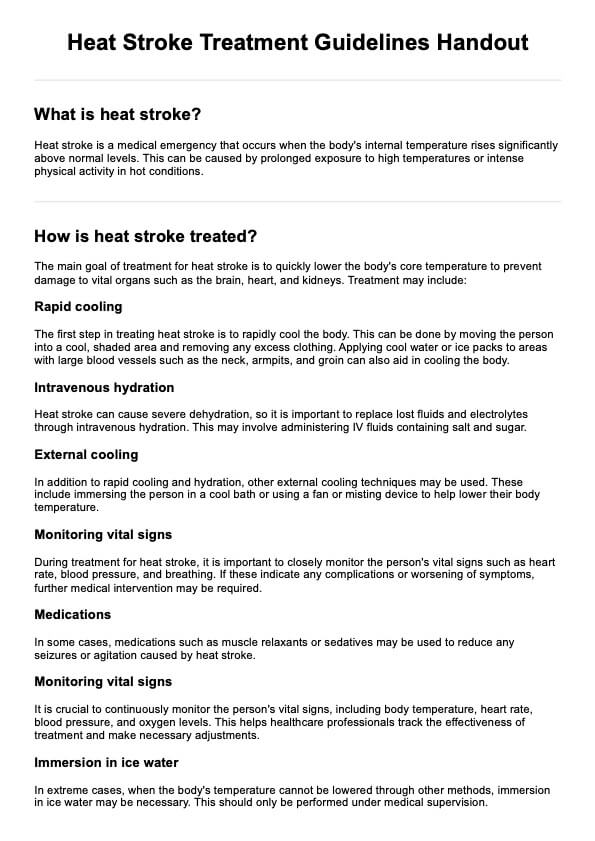




What is heat stroke?
Heat stroke is a severe heat-related illness that occurs when the body's core temperature rises above 104°F (40°C) due to prolonged exposure to extreme heat or intense physical exertion in hot weather. It is a critical condition that can lead to serious complications or even death if not treated promptly.
Heat stroke can be categorized into two types: exertional heat stroke, which occurs in individuals engaging in strenuous physical activity, and classic heat stroke, which typically affects vulnerable populations such as the elderly, infants, and those with chronic illnesses.
Heat stroke impairs the body's ability to regulate the central nervous system and core temperature, leading to symptoms such as confusion, seizures, loss of consciousness, and hot, dry skin. Unlike milder heat-related illnesses like heat cramps and heat exhaustion, heat stroke requires immediate medical attention. Effective treatment strategies include rapid cooling techniques such as cold water immersion, ice bath, or applying ice packs to the neck, armpits, and groin. Providing cold drinks and moving heat stroke patients to an air-conditioned environment are also crucial steps.
Understanding the risk factors, such as high humidity, lack of acclimatization, and inadequate hydration, is essential in preventing exertional heat illness and other heat-related illnesses. Prompt recognition and treatment of heat stroke are vital to reduce the incidence of heat-related deaths.
Symptoms of heat stroke
Recognizing the heat stroke symptoms is crucial for prompt treatment and prevention of serious complications. Heat stroke can develop quickly and may become life-threatening if not addressed immediately. Here are the key symptoms to watch for:
- High core body temperature: A core body temperature of 104°F (40°C) or higher is the main sign of heat stroke.
- Altered mental state or behavior: Confusion, agitation, slurred speech, irritability, delirium, seizures, or coma can occur.
- Hot, dry skin or profuse sweating: Skin may feel hot and dry to the touch, or there may be heavy sweating, especially in exertional heat stroke.
- Nausea and vomiting: Feeling sick to the stomach or vomiting is common.
- Flushed skin: The skin may appear red as the body temperature increases.
- Rapid breathing: Breathing may become quick and shallow.
- Racing heart rate: The pulse may become significantly increased because of the heat stress.
- Headache: A throbbing headache is a common symptom.
- Dizziness or light-headedness: Feeling faint or light-headed can occur as the body overheats.
- Muscle weakness or cramps: Heat-related illnesses often cause muscle cramps and weakness.









