







What is a Gallbladder Physical Exam?
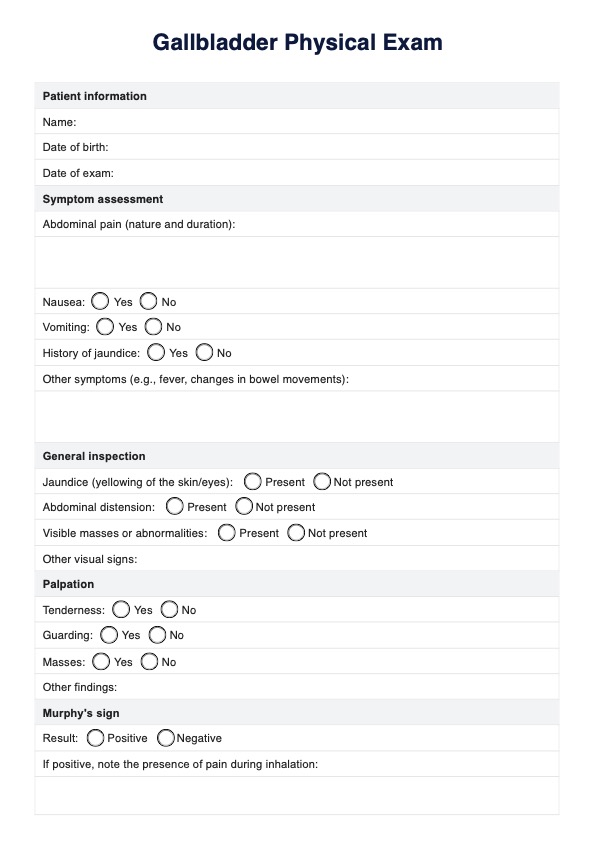
A Gallbladder Physical Exam is a clinical assessment focused on the abdomen, particularly the right upper quadrant, to identify signs of gallbladder disease. The patient is typically positioned supine, and the healthcare provider begins with a visual inspection for signs such as jaundice, abdominal distension, or any visible masses.
Palpation of the abdomen is crucial for assessing tenderness, especially in the right upper quadrant, which can indicate conditions like gallstones or cholecystitis (inflammation of the gallbladder). Another key component of the exam is Murphy's sign, where the provider applies pressure to the gallbladder area while the patient takes a deep breath; a sharp increase in pain suggests gallbladder inflammation. The provider will also inquire about symptoms such as abdominal pain, nausea, vomiting, and jaundice, which are common indicators of gallbladder issues.
Additional signs, such as Courvoisier's sign (a palpable gallbladder due to bile duct obstruction) and signs of guarding or rebound tenderness, may also be used for assessment. Overall, this physical exam is essential for diagnosing gallbladder diseases and guiding further evaluation and treatment.









