





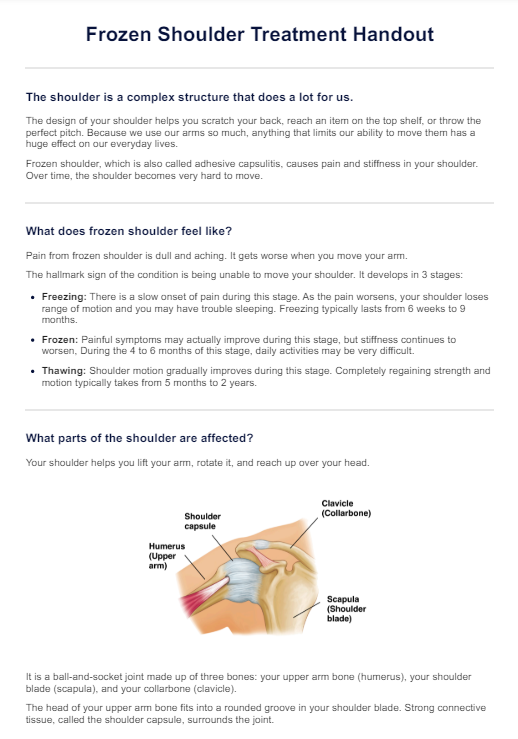




What does it mean to have a frozen shoulder?
Having a frozen shoulder, also called adhesive capsulitis, means experiencing stiffness and pain in the shoulder joint that significantly limits your range of motion. This condition occurs when the shoulder joint's capsule thickens and tightens around the shoulder blade, forming scar tissue that restricts movement. Frozen shoulder typically develops gradually and can be quite debilitating, often making everyday tasks challenging.
The shoulder joint comprises the upper arm bone, the shoulder blade, and the collarbone, all of which are supported by the rotator cuff muscles. When a frozen shoulder occurs, these structures become stiff due to inflammation and the buildup of scar tissue. This leads to shoulder pain and severely restricted shoulder movement.
Understanding the causes and symptoms is crucial for preventing and managing the condition, especially for those at higher risk of developing frozen shoulder, such as individuals with diabetes or those who have had prolonged immobility of the shoulder.
Frozen shoulder symptoms
Symptoms of frozen shoulder can progress through distinct phases, each characterized by specific challenges and changes in shoulder mobility:
- Painful stiffness: Initially, the shoulder is intensely painful and progressively stiffens. Activities such as reaching overhead or behind the back become increasingly difficult and painful.
- Frozen phase: Pain may diminish, but stiffness persists, severely limiting shoulder movement. Tasks like dressing or lifting objects become challenging despite therapy.
- Thawing phase: Shoulder pain subsides as shoulder mobility gradually improves. Range of motion returns, although complete recovery may take months to years.
Understanding these phases helps in managing symptoms and guiding treatment to alleviate pain and restore shoulder function effectively.
What is frozen shoulder caused by?
Frozen shoulder is primarily caused by the thickening and tightening of the shoulder capsule. The exact cause is often unclear, but certain factors can contribute to its development. These include prolonged immobilization of the shoulder joint, such as after surgery or injury, which can lead to the formation of scar tissue and stiffness.
Conditions like diabetes or thyroid disorders are also associated with an increased risk of developing frozen shoulder. Additionally, individuals who have had shoulder trauma, a rotator cuff tear, or inflammation in the shoulder joint are more susceptible.
What are the three stages of frozen shoulder?
Frozen shoulder, also known as adhesive capsulitis, progresses through three distinct stages, each characterized by specific symptoms and changes in shoulder mobility.
- Freezing stage: During the initial freezing stage of frozen shoulder, individuals experience a gradual onset of pain and stiffness in the shoulder joint. This phase typically begins with mild discomfort that worsens over time, especially at night or during activities requiring overhead motion. The shoulder joint capsule, which surrounds the ball and socket joint of the shoulder, starts to thicken and contract, limiting the range of motion.
- Frozen stage: In the frozen stage, pain may diminish compared to the freezing stage, but the stiffness in the shoulder becomes more pronounced. The shoulder joint capsule continues to tighten, further restricting movement. Individuals often find it difficult to perform daily tasks involving the affected arm and may compensate by relying more on their unaffected arm.
- Thawing stage: The thawing stage marks the gradual improvement in shoulder mobility and a decrease in symptoms. Shoulder movement begins to improve as the joint capsule loosens and flexibility returns.









