







What is sacroiliac joint dysfunction?
Sacroiliac joint dysfunction is a condition that affects the sacroiliac (SI) joint, which connects the sacrum (the triangular bone at the bottom of the spine) to the pelvis. This joint can become a source of pain due to various factors, including injury, inflammation, or degeneration. Sacroiliac joint abnormalities can also contribute to pain in this area. Several factors can lead to SI joint dysfunction:
- Trauma or injury to the SI joint
- Arthritis or degeneration of the SI joint
- Pregnancy and childbirth, which can cause changes in the pelvis
- Inflammation due to conditions like ankylosing spondylitis
- Abnormal gait or movement patterns that stress the SI joint
If your patient manifests the following symptoms, they may have sacroiliac joint syndrome:
- Chronic low back pain that radiates to the buttocks
- Pain around the posterior superior iliac spine
- Pain that radiates to the upper thigh or groin
- Stiffness and reduced range of motion in the lower back
- Increased pain when standing up from a sitting position or prolonged standing
- Discomfort when climbing stairs or running
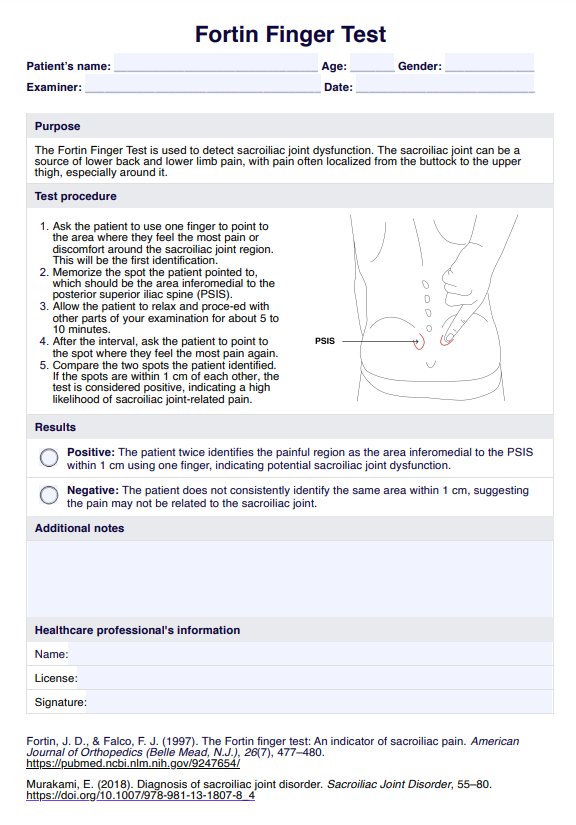
Detecting and diagnosing SI joint dysfunction involves a combination of clinical evaluation and diagnostic tests. It involves taking the patient's medical history and a physical examination that identifies tenderness over the SI joint and assesses the range of motion. Then, you can screen using the Fortin Finger Test before moving forward with other provocative tests such as the Flexion, Abduction, and External Rotation (FABER) Test and Gaenslen's Test. These may be done to exclude other potential pain sources, such as posterior joint pain sources and zygapophyseal joint pain generators. The last step before a confirmation is doing imaging studies like X-rays, MRI, or CT scans, which can rule out other causes of lower back pain and provide detailed images of the SI joint.
In some cases, SI joint injections can be done for diagnosis. These involve injecting a local anesthetic into the painful region; if the patient's lower back pain is temporarily relieved, it confirms the diagnosis. Provocation-positive joint injections are also used to validate positive findings of sacroiliac joint abnormalities.









