









What is Acceptance and Commitment Therapy?
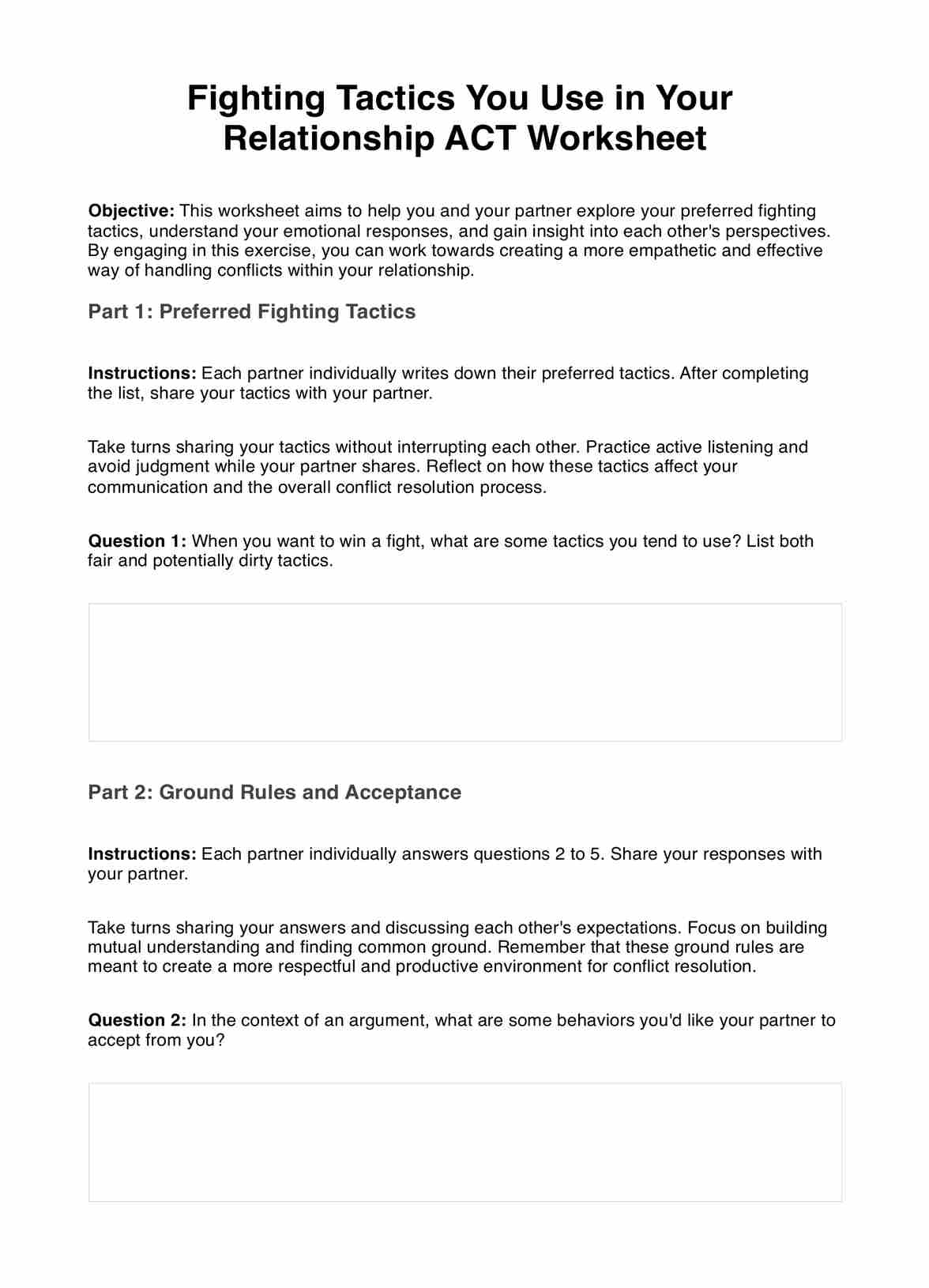
Relationships can encounter various challenges, and conflicts are a natural part of any partnership. The worksheet offers a structured approach to address the fighting tactics individuals tend to employ during disagreements. By openly discussing these tactics, partners gain insight into each other's behaviors and underlying emotions. By understanding each other's preferences, they can establish ground rules that encourage a more respectful and effective conflict-resolution process.
Moreover, exploring the dynamics of chasing and running allows partners to empathize with each other's perspectives, ultimately fostering better communication and emotional connection. The worksheet encourages empathy, active listening, and self-awareness, creating a pathway toward improved relationship dynamics and conflict management.
Acceptance and Commitment Therapy (ACT) is a psychological intervention rooted in cognitive-behavioral therapy. combines mindfulness strategies with a values-oriented approach to help individuals manage psychological distress and enhance their overall well-being. The core principle of ACT revolves around accepting one's emotions, thoughts, and experiences rather than trying to avoid or control them. This therapeutic approach encourages individuals to be present at the moment, fully experiencing their feelings without judgment.
ACT introduces the concept of "psychological flexibility," which involves embracing uncomfortable emotions and thoughts while committing to behaviors that align with one's values and goals. It helps individuals detach from unhelpful thinking patterns and instead focus on purposeful actions that enhance their quality of life. By practicing mindfulness and identifying personal values, individuals can create a meaningful life despite their challenges.









