






What is the Fagerström Test for Nicotine Dependence (FTND)?
The Fagerström Test for Nicotine Dependence (FTND), also known as the Fagerström Tolerance Questionnaire, is a standardized instrument used to assess the degree of nicotine dependence in cigarette smokers. It is widely utilized in research and clinical settings to measure various aspects of cigarette smoking, behavior, and addiction.
Initially developed by Karl Fagerström and colleagues, the FTND consists of a series of questions designed to evaluate different aspects of nicotine dependence, such as cigarette consumption, smoking history, withdrawal symptoms, and unsuccessful efforts to quit smoking.
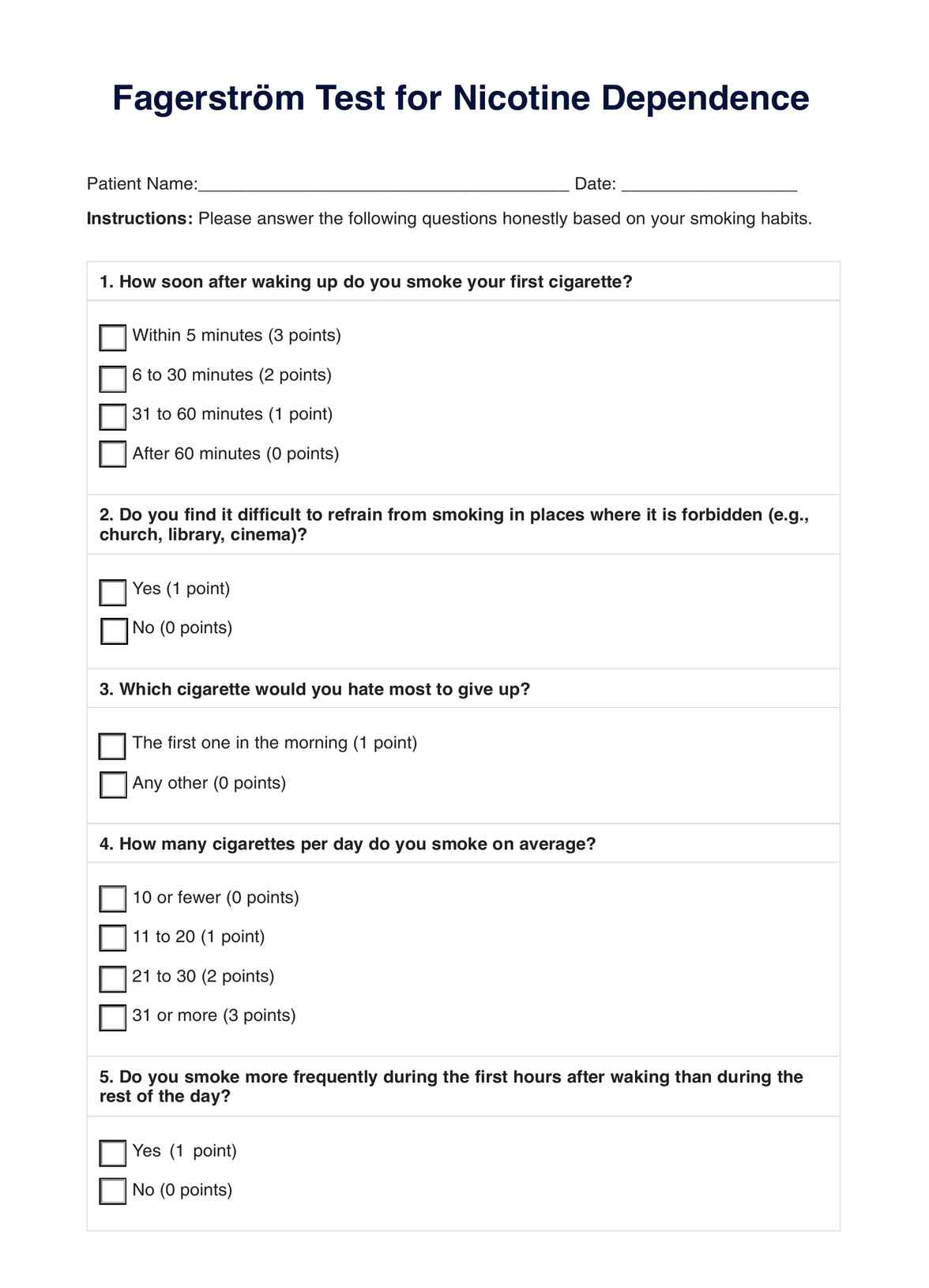
It is comprised of six items, each addressing a specific aspect related to nicotine addiction, such as the number of cigarettes smoked per day, the compulsion to smoke, and the time to the first cigarette after waking up.
The FTND provides an ordinal measure of nicotine dependence, allowing researchers and clinicians to categorize individuals into different levels of nicotine dependence related to, ranging from low to high reliance. It has been extensively validated and has demonstrated good predictive validity in assessing smoking behavior and the likelihood of successful smoking cessation.
The test is administered through a structured questionnaire format, with participants providing responses that are then scored to determine their level of nicotine dependence and physical addiction. Higher scores indicate greater nicotine dependence and a more severe addiction to smoking.
The FTND is frequently used in conjunction with other measures of smoking behavior and addiction to provide a comprehensive assessment of nicotine dependence. It has been adapted and modified for use in different populations, including adolescents and individuals with psychiatric comorbidities.
Research studies utilizing the FTND have contributed to our understanding of nicotine dependence and smoking behavior, informing interventions and treatments aimed at smoking cessation and reducing tobacco use in the general population.









