









What is dysphagia?
Dysphagia refers to impaired swallowing, making it challenging for individuals to move food or liquids from their mouth to their stomach. This condition can result from various causes, such as neurological disorders, stroke, or throat injuries, and can range from mild discomfort to a complete inability to swallow. Individuals with dysphagia often face aspiration risk, where food or liquid mistakenly enters the lungs, leading to serious complications and risk of aspiration pneumonia.
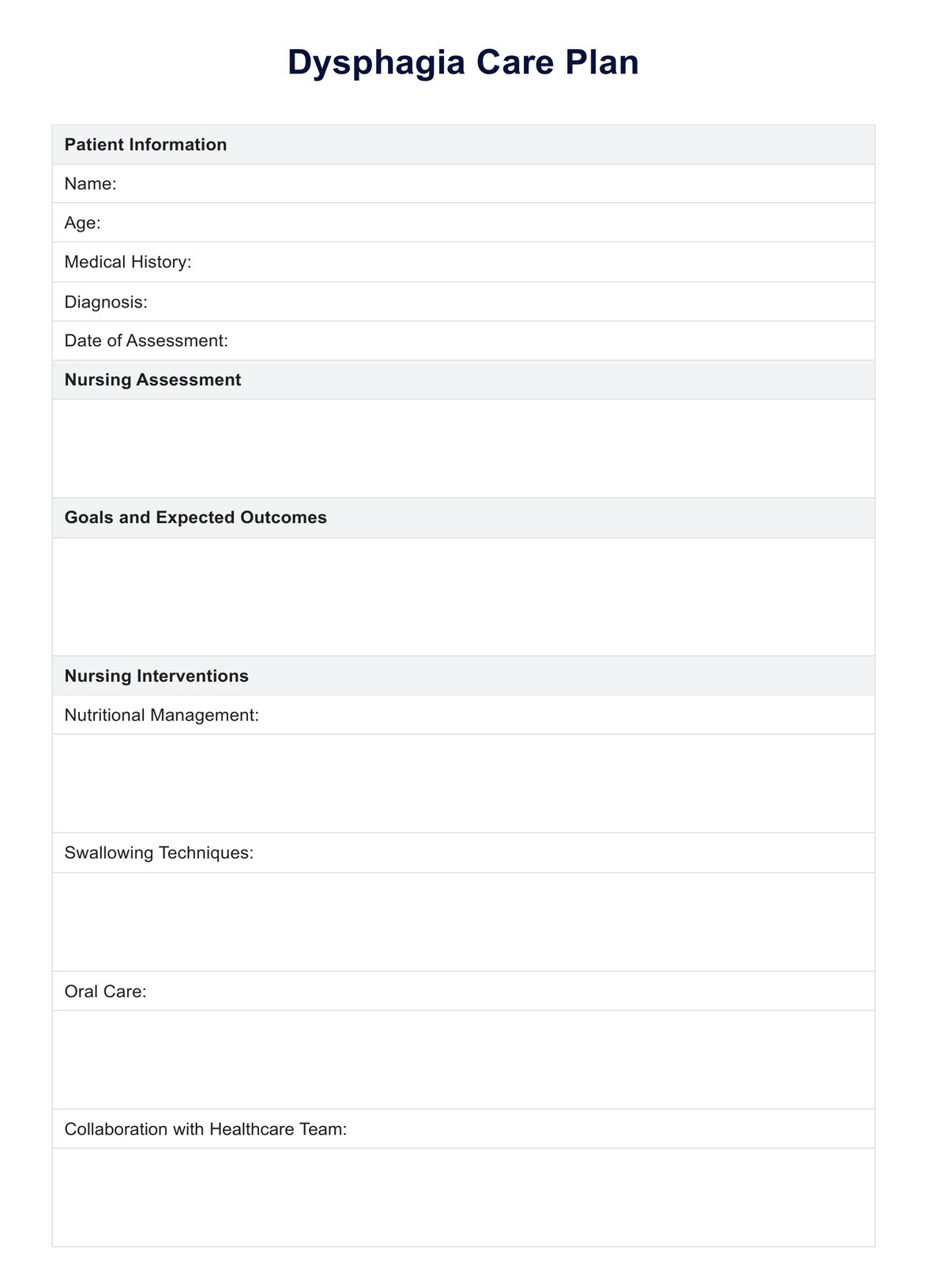
A care plan for dysphagia is essential for managing these swallowing difficulties and preventing complications. This may include an impaired swallowing care plan and dysphagia management, which focuses on techniques to improve swallowing safety. Key nursing interventions include ensuring the patient eats slowly, using specialized utensils, and positioning the individual properly during meals.
Dysphagia management aims to reduce the risk of aspiration and provide long-term care, such as exercises and modified diets. A nursing care plan for dysphagia often outlines steps for monitoring the patient’s progress and ensuring safe eating habits. Identifying impaired swallowing related issues helps healthcare teams, like a speech language pathologist, take preventive actions and support patients with effective treatments tailored to their condition.









