






What is Tourette's syndrome?
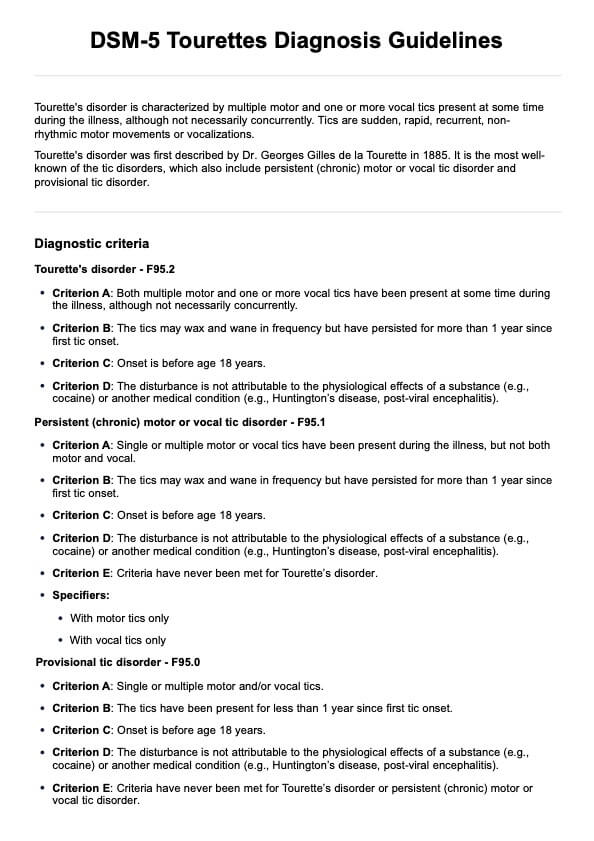
Tourette's syndrome (also previously known as Tourette's disorder) is a neurological disorder characterized by multiple motor and vocal tics that have been present for more than a year (American Psychiatric Association, 2022). Tics are sudden, rapid, recurrent, non-rhythmic abnormal movements or vocalizations. They often come with a feeling of mounting inner tension or urge, known as a premonitory urge, which is temporarily relieved by the tic.
Dr. Georges Gilles de la Tourette, a French neurologist, first described Tourette's Syndrome in 1885. Over time, it has become the most well-known of tic disorders, which also include persistent (chronic) motor or vocal tic disorder and provisional tic disorder. These disorders are classified based on tic severity, which considers the type and duration of tics.
- Simple tics: Short duration (milliseconds), such as eye blinking or throat clearing.
- Complex tics: Longer duration (seconds) and involve combinations of movements or sounds, such as simultaneous head turning and shoulder shrugging or uttering phrases.
Although tics can involve any muscle group or vocalization, they are more commonly associated with some muscle groups and certain sounds or turns of phrase. While tics are generally experienced as involuntary, many individuals can temporarily suppress them.









