









What is distal clavicle osteolysis?
Distal clavicle osteolysis, also known as AC joint osteolysis, is a condition characterized by the gradual erosion of bone tissue at the end of the clavicle, specifically where it meets the acromion of the shoulder blade. This condition typically manifests as persistent shoulder pain, which can range from sharp to aching, often exacerbated by movement or pressure on the affected area.
The erosion of bone in distal clavicle osteolysis is often associated with activities that place repetitive stress on the shoulder joint, such as weightlifting or overhead sports, though it can also result from acute trauma or conditions like rheumatoid arthritis.
Diagnosis usually involves a thorough physical examination, which may reveal tenderness over the AC joint. Imaging techniques like X-rays or MRI scans are used to confirm the diagnosis and assess the extent of bone damage.
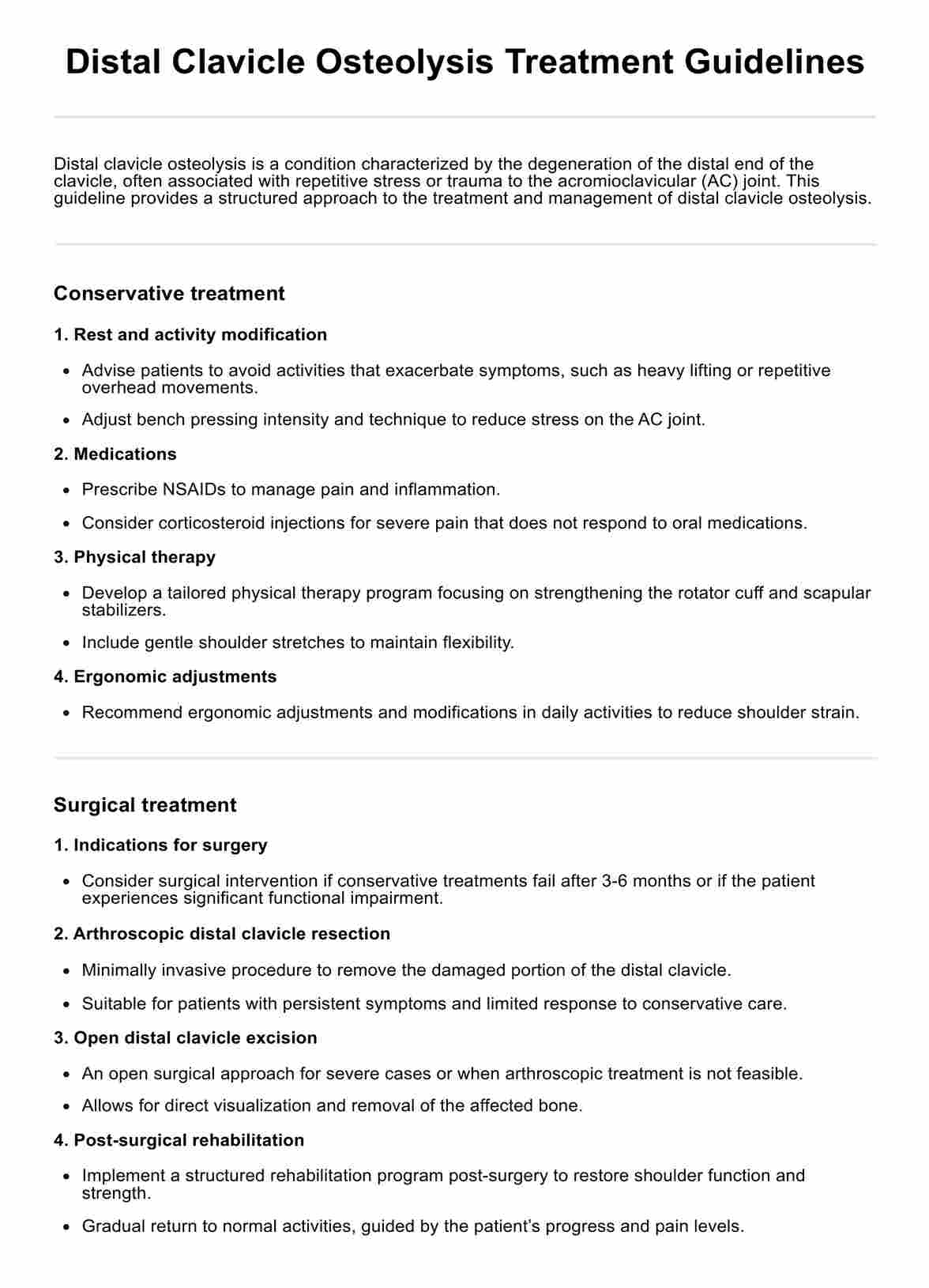
Treatment options vary depending on the severity of the condition. Conservative approaches include rest, ice, and anti-inflammatory medications, often complemented by physical therapy to strengthen surrounding muscles and improve joint stability. In cases where conservative methods do not provide relief, surgical intervention such as arthroscopic distal clavicle resection or open distal clavicle excision may be recommended to remove the damaged bone and alleviate symptoms.
Understanding distal clavicle osteolysis is crucial for effective management, ensuring that appropriate treatment, whether conservative or surgical, is chosen based on individual patient needs and the extent of AC joint involvement.
Symptoms of distal clavicle osteolysis
Distal clavicle osteolysis can present with several distinctive symptoms that indicate the condition's presence and severity. Recognizing these symptoms is crucial for timely diagnosis and treatment. Common signs and symptoms include:
- Persistent shoulder pain, particularly around the AC joint
- Pain that worsens with overhead activities or when pressure is applied to the shoulder
- Tenderness and swelling over the AC joint
- Limited range of motion in the shoulder joint, especially during movements that involve lifting or reaching overhead
- Grinding or popping sensation with shoulder movement
- Weakness in the affected shoulder, impacting daily activities and sports participation
These symptoms may develop gradually over time, often starting with mild discomfort that progresses to more persistent pain and functional limitations.
Causes of distal clavicle osteolysis
Distal clavicle osteolysis is primarily caused by repetitive stress and microtrauma to the AC joint. This condition is frequently observed in athletes and individuals who engage in activities involving heavy lifting or repetitive overhead movements. Such repetitive stress leads to the gradual wearing away of the distal clavicle, resulting in sharp or aching pain. Acute trauma, such as a direct blow to the shoulder, can also precipitate clavicle osteolysis.
In some cases, underlying conditions like rheumatoid arthritis contribute to the development of distal clavicular osteolysis by promoting inflammation and joint degeneration. The condition can progress to the point where conservative treatments, such as physical therapy, are insufficient, necessitating surgical interventions like distal clavicle resection or arthroscopic treatment to alleviate symptoms and restore function. Understanding these causes is crucial for preventing and managing distal clavicle osteolysis effectively.









