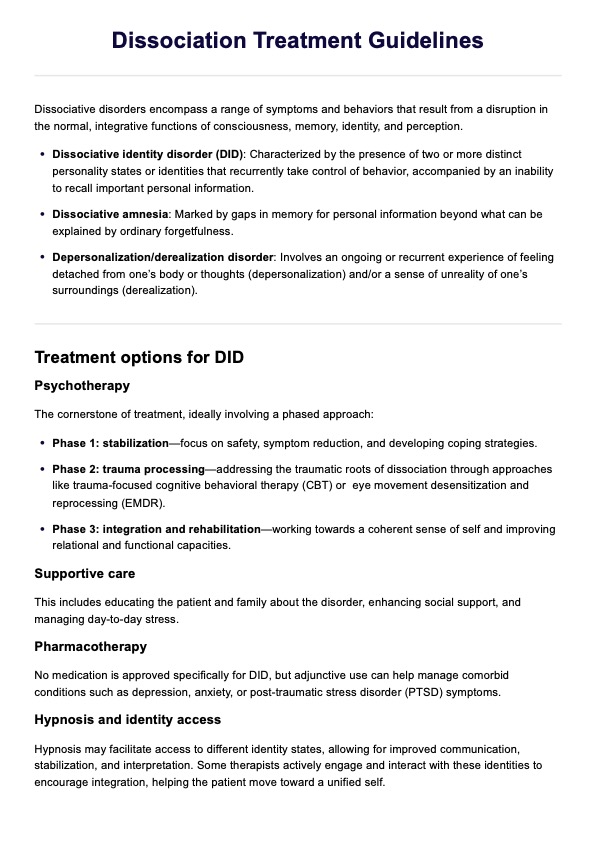
Treatment options for dissociation
Here are some general treatment options for dissociation. Note that treatment approaches may vary based on the type of dissociative disorder and the specific needs of the patient.
Psychotherapy
Psychotherapy is the cornerstone of treatment for dissociative disorders, aiming to help individuals understand and integrate fragmented experiences. CBT is often utilized to address negative thought patterns and promote healthier coping mechanisms. These therapeutic approaches enable individuals to name traumatic memories, gain insight into their dissociation, and develop strategies for managing symptoms.
Trauma-focused therapies
Trauma-focused therapies, including exposure therapy and narrative therapy, are designed to help individuals process traumatic or stressful events or memories in a controlled and safe environment. These therapies reduce the emotional impact of these stressful situations and memories, fostering healing.
Medications
While medications do not specifically treat dissociative disorders, they can be helpful in managing co-occurring symptoms such as depression, anxiety, or sleep disturbances. Antidepressants and anti-anxiety medications are commonly prescribed by a mental health specialist to treat symptoms and support overall mental health, providing a more stable foundation for therapeutic work.
Support groups and peer support
Support groups and peer support can be valuable in treating mental health conditions or illnesses by offering a sense of community and shared understanding. Connecting with others who have similar experiences can reduce feelings of isolation, provide emotional support, and promote healing through collective empathy and encouragement.
To learn more about the specific interventions and treatments for dissociative disorders, download our Dissociation Treatment Guidelines handout.