



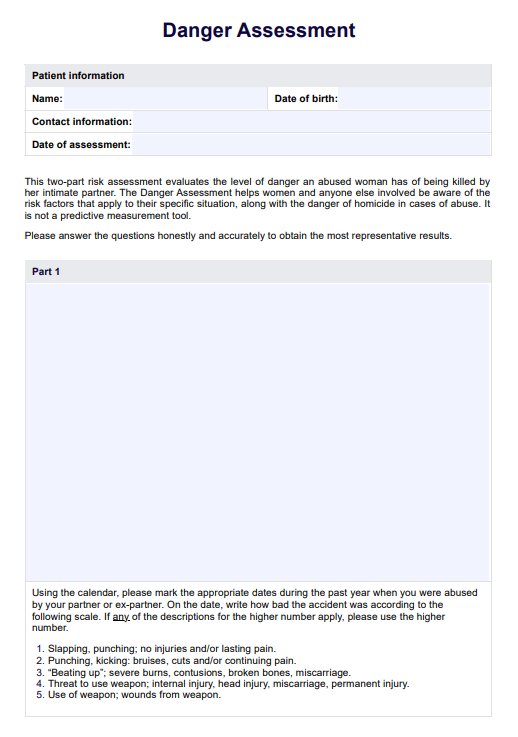




What is Danger Assessment?
The Danger Assessment is a validated, evidence-based risk assessment instrument originally developed by Dr. Jacquelyn C. Campbell in 1986 (Glass & Campbell, 2004). It is designed to help healthcare professionals, domestic violence advocates, law enforcement officials, and shelter workers determine the risk of intimate partner homicide in cases of intimate partner violence. The danger assessment requires medical practitioners and other trained professionals to systematically evaluate risk factors that are statistically linked to lethal outcomes in domestic violence situations.
This tool consists of a one-year calendar and a 20-item questionnaire. The calendar increases accurate recall by helping the abused woman mark the dates when physically abusive incidents occurred. The questionnaire addresses key risk factors such as weapon ownership, threats to kill, employment instability, sexual violence, and patterns of physical violence. The danger assessment helps by providing a structured method to quantify danger and prioritize intervention for victims.
Widely used across domestic violence services, law enforcement, and the criminal justice system, the danger assessment holds strong content validity support. Its weighted scoring system allows practitioners to classify the severity of the risk, ensuring that those at the highest risk are connected quickly to appropriate safety planning and resources.
Professionals who regularly encounter abused women, such as nurses, social workers, and police officers, use the danger assessment to make informed decisions in high-stakes situations. By integrating this risk assessment into practice, providers strengthen their ability to identify, support, and protect individuals facing the most serious threats from an intimate partner.









