





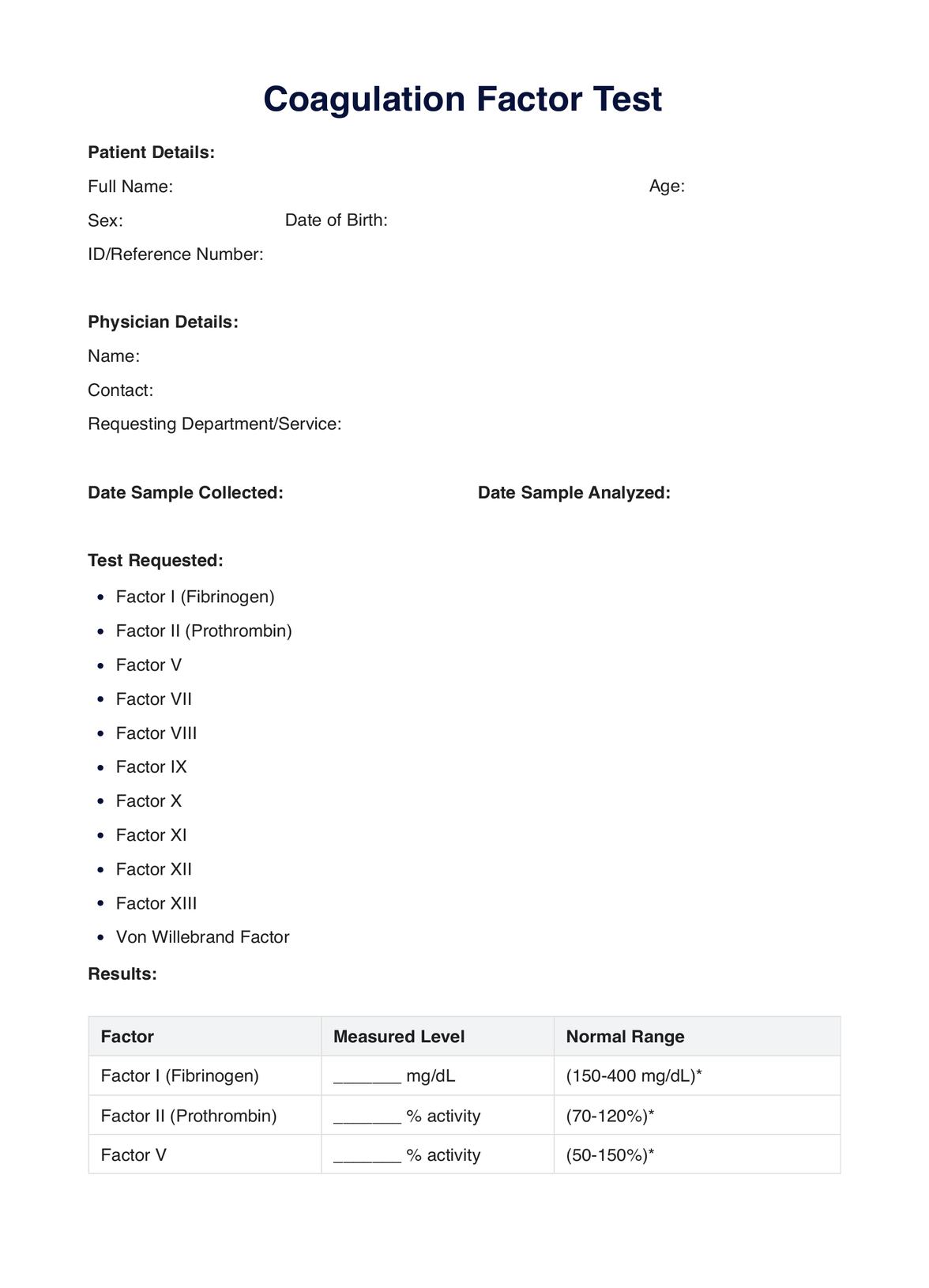




What is a Coagulation Factor Test?
A Coagulation Factor Test is a medical procedure designed to examine the effectiveness of proteins in your blood, known as coagulation factors, which are integral to the blood clotting process. These factors help prevent excessive bleeding and promote proper healing of wounds. If any of these factors are deficient or abnormal, it can result in conditions such as Hemophilia or Von Willebrand disease.
This test usually involves drawing a sample of the patient's blood, which is then subjected to laboratory analysis. The results offer crucial insights into the patient's ability to form blood clots and can also highlight potential deficiencies in specific coagulation factors.
Several coagulation tests include prothrombin time (PT), activated partial thromboplastin time (aPTT), and thrombin time. These tests measure the time it takes for blood to clot, helping doctors assess a person's risk of excessive bleeding or clotting. They are often used as screening tools to detect abnormalities in the coagulation process.
In some cases, more specific assays may be used to quantify individual clotting factors. These tests can help diagnose particular bleeding disorders and guide treatment decisions.









