







What is cholecystitis?
Cholecystitis is an inflammation of the gallbladder, a small organ located beneath the liver that stores bile. This condition can occur suddenly, known as acute cholecystitis, or develop gradually over time, referred to as chronic cholecystitis. Acute cholecystitis typically presents with intense pain in the upper right abdomen, which may radiate to the shoulder or back. This severe abdominal pain is a primary symptom of cholecystitis. Other symptoms can include nausea, vomiting, fever, and loss of appetite, indicating a need for immediate medical attention to prevent complications such as gallbladder rupture or infection.
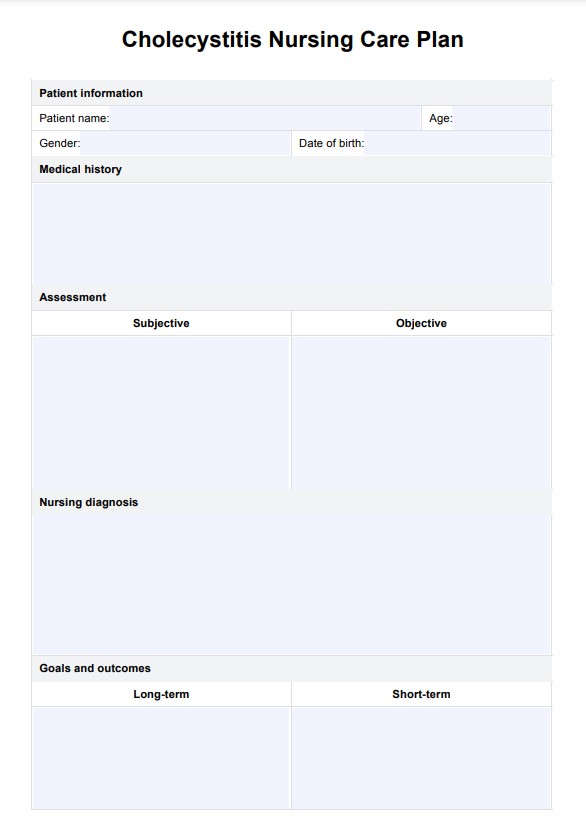
Chronic cholecystitis, on the other hand, involves repeated episodes of inflammation, often due to gallstones obstructing the bile ducts. Gallstones can obstruct both the cystic duct and the common bile duct, leading to severe complications. This form of cholecystitis may cause milder, more intermittent pain but still requires careful management to avoid long-term damage. Both forms of cholecystitis necessitate a tailored nursing care plan to manage pain, monitor for complications, and educate patients on dietary adjustments and lifestyle changes to support recovery and prevent recurrence.









