





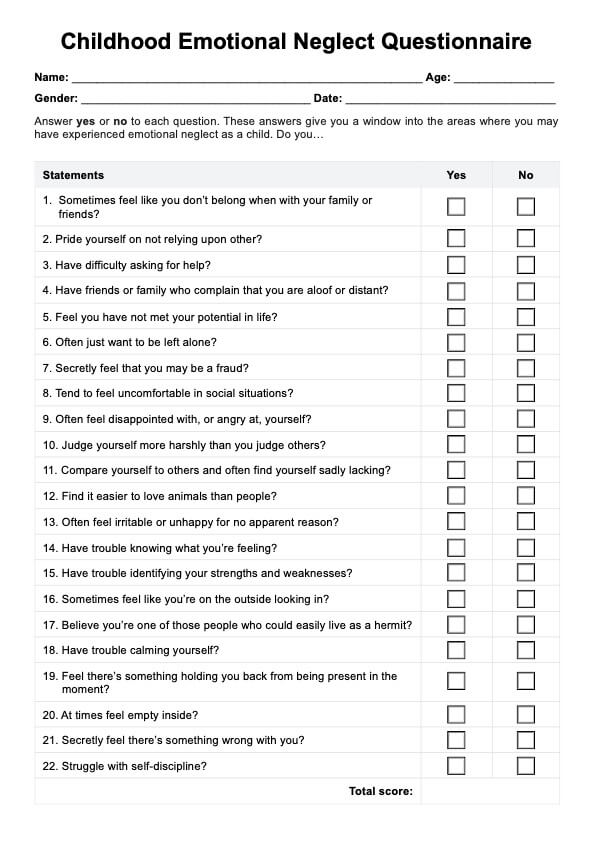




What is the Childhood Emotional Neglect Test?
The Childhood Emotional Neglect (CEN) Test is designed to assess and identify experiences of emotional neglect during a person’s formative years. Childhood emotional neglect occurs when caregivers fail to provide the necessary emotional support, validation, and attention that children need to thrive. Unlike more overt forms of maltreatment, such as physical abuse, emotional neglect is characterized by the absence of emotional responsiveness, nurturing, and engagement from family members, which can significantly impact a child's emotional development.
Emotional neglect can manifest in various ways, including a lack of attention to a child's emotional needs, failure to validate their feelings, and an overall absence of supportive interactions. This form of neglect can lead to long-lasting effects on an individual's emotional well-being, potentially influencing their entire life. Individuals who have suffered childhood emotional neglect often experience trouble calming themselves, difficulty understanding their own emotions, and challenges in forming healthy relationships.
The Childhood Emotional Neglect Test, often administered as part of an emotional neglect questionnaire, helps to identify signs that an individual may have been emotionally neglected during their childhood. The test is a valuable tool for mental health professionals, providing insights into how unmet emotional needs during early development can affect a person's current emotional state and behavior.
The test typically includes questions that explore various aspects of a person's upbringing, including their experiences with emotional validation and support from caregivers. For many, the test can be critical in addressing unresolved issues related to their inner child and developing healthier ways to manage their emotions.
Taking the Childhood Emotional Neglect Test can be an eye-opening experience for individuals. It reveals how caregivers' lack of emotional engagement may have contributed to difficulties in understanding their emotions and maintaining emotional stability.









