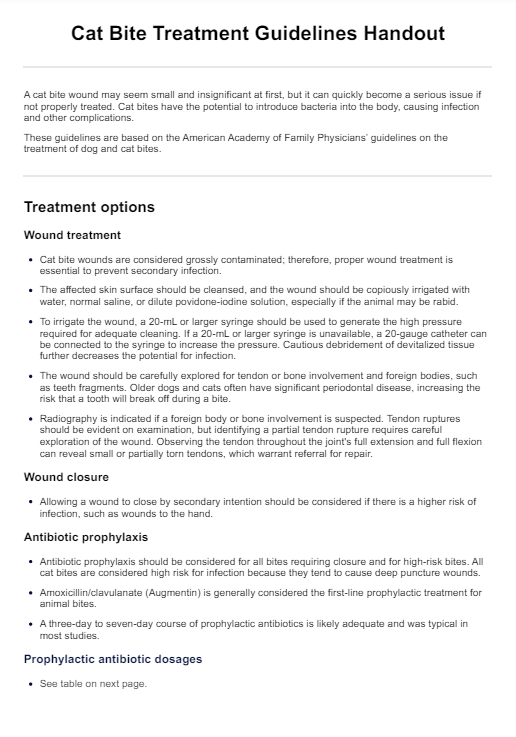
How to treat cat bites
When cat bites occur, they often result in deep puncture wounds that can easily become infected. Whether minor cat scratches or a more serious bite, immediate and proper treatment is essential to prevent complications.
Clean the wound
The initial step in managing a cat bite is to meticulously clean the wound. Utilize warm water and mild soap to gently remove any contaminants from the site. This is crucial for infection control and facilitating proper healing.
Hemostasis
For bleeding wounds, apply gentle pressure with a sterile cloth or bandage for several minutes. If hemostasis is not achieved or the wound is extensive, urgent medical intervention is necessary.
Infection prophylaxis
Cat bites are highly susceptible to infection due to oral bacteria. Post-cleansing, apply a broad-spectrum antibiotic ointment and cover with a sterile dressing. Monitor the wound for erythema, swelling, or purulent discharge, which are indicative of infection.
Rabies surveillance
Cat bites pose a risk for rabies transmission, a severe viral infection impacting the central nervous system. If the vaccination status of the cat is unknown or suspect, immediate medical evaluation is warranted. Clinical manifestations of rabies include pyrexia, cephalalgia, cognitive impairment, paralysis, and dysphagia.
Advanced management
Patients with immunocompromised systems or those exhibiting severe infections from cat bites may require advanced interventions, including systemic antibiotics or surgical debridement. Close monitoring for potential complications is advised.