Types of blood tests
There are various blood test types used in clinical practice, each serving a distinct diagnostic or monitoring purpose. Some tests focus on basic biochemical parameters, while others evaluate hormonal, immunologic, or oncologic markers. Most blood tests are performed on venous blood samples, but arterial samples may be used in specialized testing such as arterial blood gas analysis.
Common blood tests
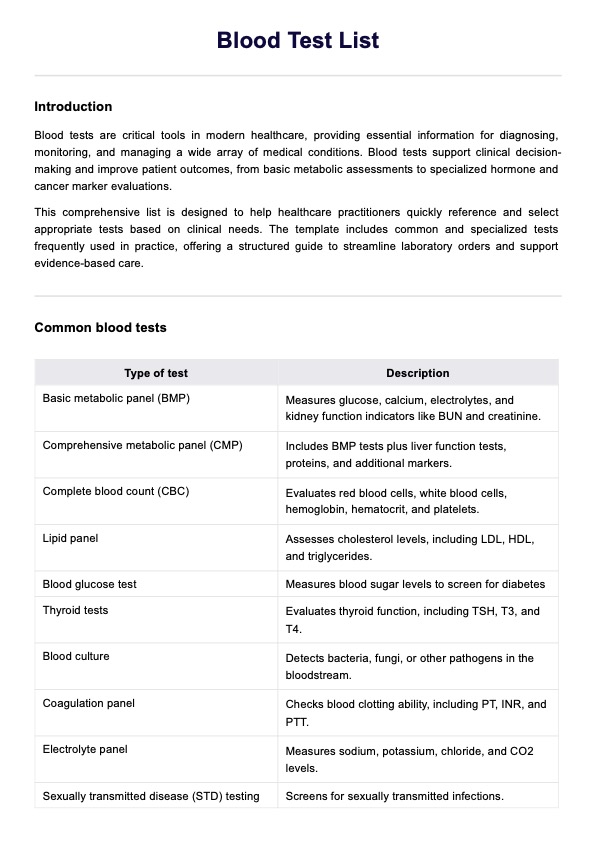
The most common blood tests used in routine medical evaluations provide essential insights into metabolic, hematologic, and cardiovascular health (Baxter Health, n.d.). The basic metabolic panel (BMP) and comprehensive metabolic panel (CMP) assess kidney function, electrolyte balance, and liver function through key markers.
The complete blood count (CBC) test analyzes red blood cells, white blood cells, and platelets to help diagnose infections, bone marrow disorders, and anemia (National Library of Medicine, 2022). The lipid panel evaluates cholesterol and triglyceride levels linked to heart disease and stroke risk. A blood glucose test measures sugar levels to screen for diabetes.
Other common blood tests include thyroid panels for hormonal balance, blood clotting assessments like the coagulation panel, and electrolyte panels that measure sodium, potassium, and carbon dioxide levels. These tests are typically ordered during routine checkups or to investigate general symptoms.
Specialized blood tests
Specialized blood tests provide targeted information about specific systems or conditions. For example, tumor markers and circulating tumor cells assist in identifying and monitoring blood cancer and solid tumors (National Cancer Institute, 2023). To diagnose liver disease or damage, liver function tests evaluate hepatic enzymes such as alanine transaminase (ALT), aspartate transaminase (AST), and alkaline phosphatase (ALP).
C-reactive protein (CRP) and erythrocyte sedimentation rate (ESR) detect systemic inflammation (Harrison, 2015), which may indicate autoimmune activity or infection. Endocrine tests assess hormone levels linked to reproductive health, metabolism, and growth. Allergy and autoimmune tests measure antibodies like ANA and IgE to evaluate the immune system for hypersensitivity or autoimmune disorders.
Other key specialized tests include prothrombin time (PT) with (international normalized ratio) INR for anticoagulant monitoring, pancreatic enzyme tests (amylase, lipase) for pancreatic function, and mineral and nutrient panels for deficiencies in iron, vitamin B12, and vitamin D. These tests often rely on complex chemical reactions and play a critical role in diagnosing and managing complex health conditions, including heart attack, endocrine dysfunctions, and chronic inflammatory diseases.