





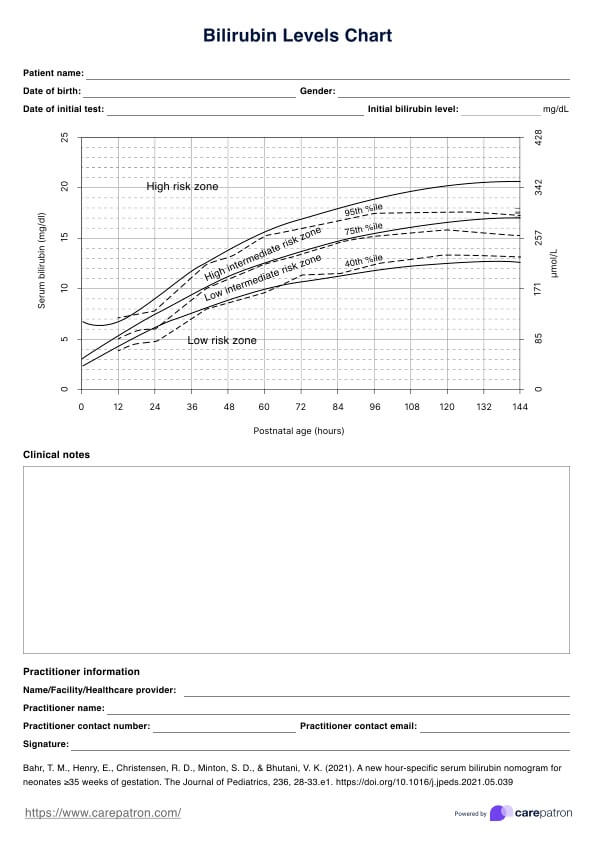




What are bilirubin levels?
Bilirubin levels in the blood offer a crucial insight into a person's liver function, overall health, and potential issues with the breakdown or excretion of red blood cells. Essentially, bilirubin is a yellowish substance the body creates when red blood cells break down. The liver is vital in processing this compound, making its levels a valuable diagnostic indicator.
Bilirubin production happens when red blood cells reach the end of their lifecycle, around 120 days. They are broken down, releasing hemoglobin, which is then converted into bilirubin.
Bilirubin levels may build up because of obstructed bile ducts, which may lead bile build up in the liver and cause jaundice.
Interpreting bilirubin levels in the context of a patient's medical history, physical examination, and other laboratory and diagnostic tests is essential to determining the underlying cause and guiding appropriate treatment.
What is the difference between conjugated and unconjugated bilirubin?
There are two primary forms of bilirubin:
- Unconjugated (indirect) bilirubin: This form is insoluble and cannot be excreted in bile or urine. It is transported to the liver, where it undergoes conjugation (binding to a sugar molecule) to become soluble.
- Conjugated (direct) bilirubin: This form is soluble and can be excreted through bile and urine. It is produced in the liver when unconjugated bilirubin is conjugated. Elevated levels can impact bilirubin excretion and can be associated with diseases such as Rotor syndromes and other types of liver disease.
Elevated bilirubin levels can indicate conditions like hemolytic anemia or liver diseases impairing conjugation or uptake. Elevated levels of conjugated bilirubin may suggest biliary tract obstruction or liver disease that impairs bile excretion (Wehbi, 2020). This can then impact the body's excretion processes, which can be noted through the appearance of dark urine, delayed passage of meconium, and pale stools.









