How to treat atlantoaxial instability
A multifaceted approach is essential when addressing the complex challenge of atlantoaxial instability (AAI). AAI, a condition with excessive movement at the junction between the atlas (C1) and the axis (C2) vertebrae in the neck, can lead to significant discomfort and neurological issues.
Understanding the available treatment options is crucial for clinicians aiming to provide comprehensive care that addresses the instability's symptoms and underlying causes. This discussion will outline both non-surgical and surgical treatments available for AAI, emphasizing the importance of personalized patient care plans and surgical evaluation.
Non-surgical treatment
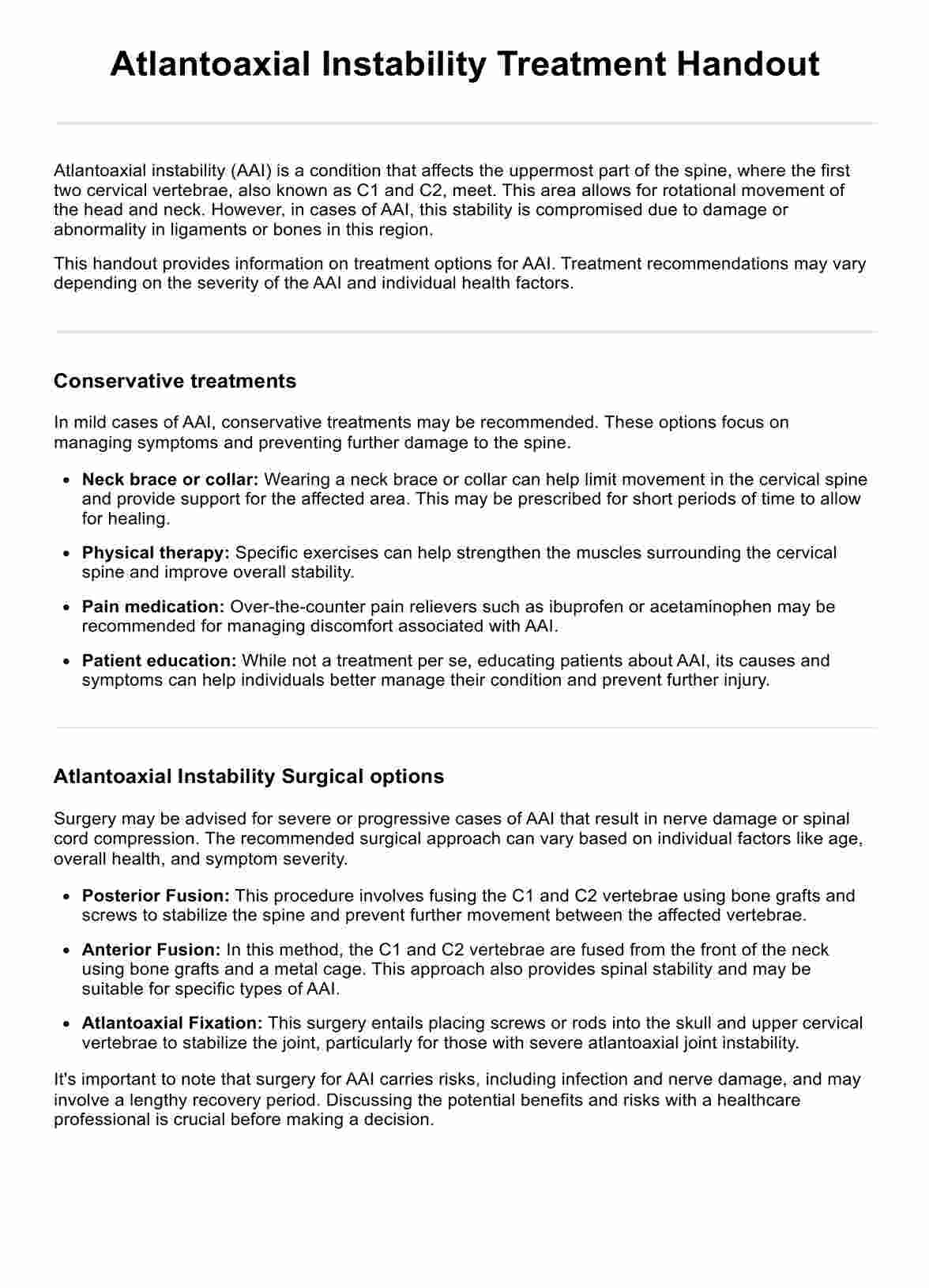
For mild cases of AAI and those without significant spinal cord compression, conservative measures such as physical therapy, bracing, or immobilization may be employed to relieve symptoms and stabilize the neck.
Surgical treatment
In cases where there is significant instability or neurologic impairment, surgical options such as posterior spinal fusion surgery or the insertion of screws to stabilize the affected vertebrae might be necessary. These procedures aim to prevent further displacement and protect the spinal cord.
Monitoring and regular assessment
Routine imaging tests, such as computed tomography (CT) or magnetic resonance imaging (MRI), are crucial for monitoring the stability of the cervical spine and assessing the effectiveness of treatment over time.
With the guidelines and treatment options outlined here, healthcare professionals are well-equipped to manage atlantoaxial instability effectively. Regular follow-up and adaptation of treatment plans are key to ensuring patient safety and improving outcomes.
By staying informed about the latest treatment methodologies and employing a careful, attentive approach, practitioners can significantly enhance the quality of life for patients dealing with this challenging condition.