









What are anxiety coping skills?
Anxiety coping skills are strategies designed to help individuals manage anxiety, reduce stress, and regulate emotional responses. These coping strategies are essential for handling anxiety disorders, as they allow individuals to address both the mental and physical aspects of anxiety. It also allows individuals feeling anxious to identify triggers in stressful situations. When anxious feelings occur to an individual, coping strategies such as relaxation techniques, including breathing exercises and progressive muscle relaxation (Touissaint et. al., 2021), can provide immediate relief by calming the body and mind.
According to the Anxiety & Depression Association of America (2019), here are some effective anxiety management techniques to lower anxiety:
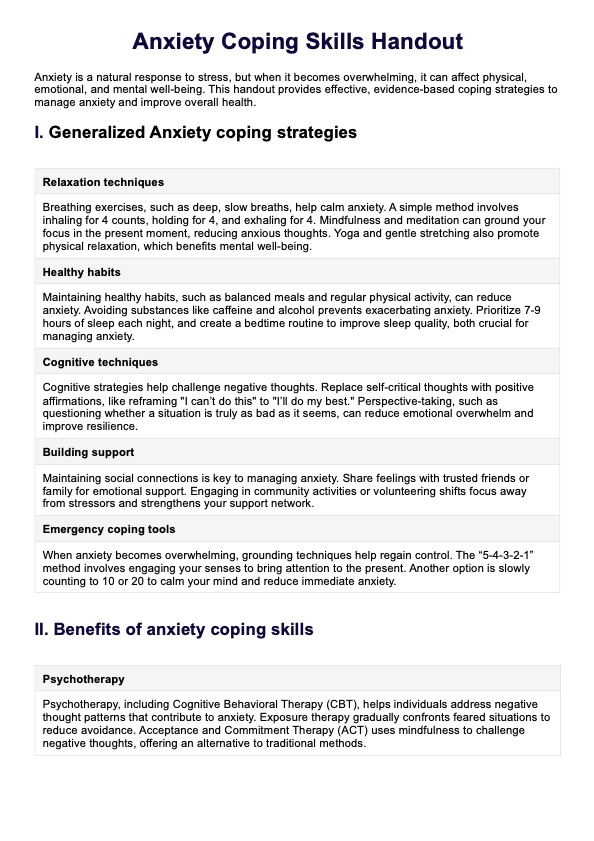
Relaxation techniques
Relaxation is essential for managing anxiety. Breathing exercises, such as slow, deep breaths, can help calm your mind and body. A simple method involves inhaling for 4 counts, holding for 4 counts, and exhaling for 4 counts. Mindfulness and meditation practices can also bring your focus to the present moment, reducing overwhelming thoughts. Additionally, yoga or gentle stretching routines promote physical relaxation, which can positively impact mental well-being.
Healthy habits
Maintaining healthy lifestyle habits can significantly reduce anxiety. Start by eating well-balanced meals, as skipping meals or consuming unbalanced diets may increase anxiety. Incorporate daily physical activities like walking, cycling, or yoga to boost endorphin levels and improve mood. It's equally important to avoid substances like alcohol and caffeine, which can exacerbate anxiety and trigger panic episodes. Finally, prioritize sleep hygiene by aiming for 7-9 hours of rest each night with an established bedtime routine.
Cognitive techniques
Cognitive strategies empower you to challenge negative thoughts and maintain a positive outlook. When anxiety arises, practice replacing self-critical or catastrophic thoughts with realistic affirmations. For instance, instead of thinking, "I can’t do this," reframe it as: "I’ll do my best, and that’s enough." Perspective-taking is another helpful tool—pause and ask yourself, "Is this situation really as bad as it seems?" This approach can make challenges feel more manageable and reduce emotional overwhelm.
Building support
Building and maintaining social connections is a powerful way to cope with anxiety. Openly sharing your feelings with trusted friends or family members fosters emotional support and reassurance. Additionally, consider engaging in community activities or volunteering.
Emergency coping tools
When anxiety feels overwhelming, grounding techniques can help you regain control. One effective strategy is the “5-4-3-2-1” technique, which involves engaging your senses by identifying 5 things you see, 4 you can touch, 3 you hear, 2 you smell, and 1 you taste. Another quick method is to count slowly to 10 (or 20 if needed) to calm your mind and bring yourself back to the present moment.









