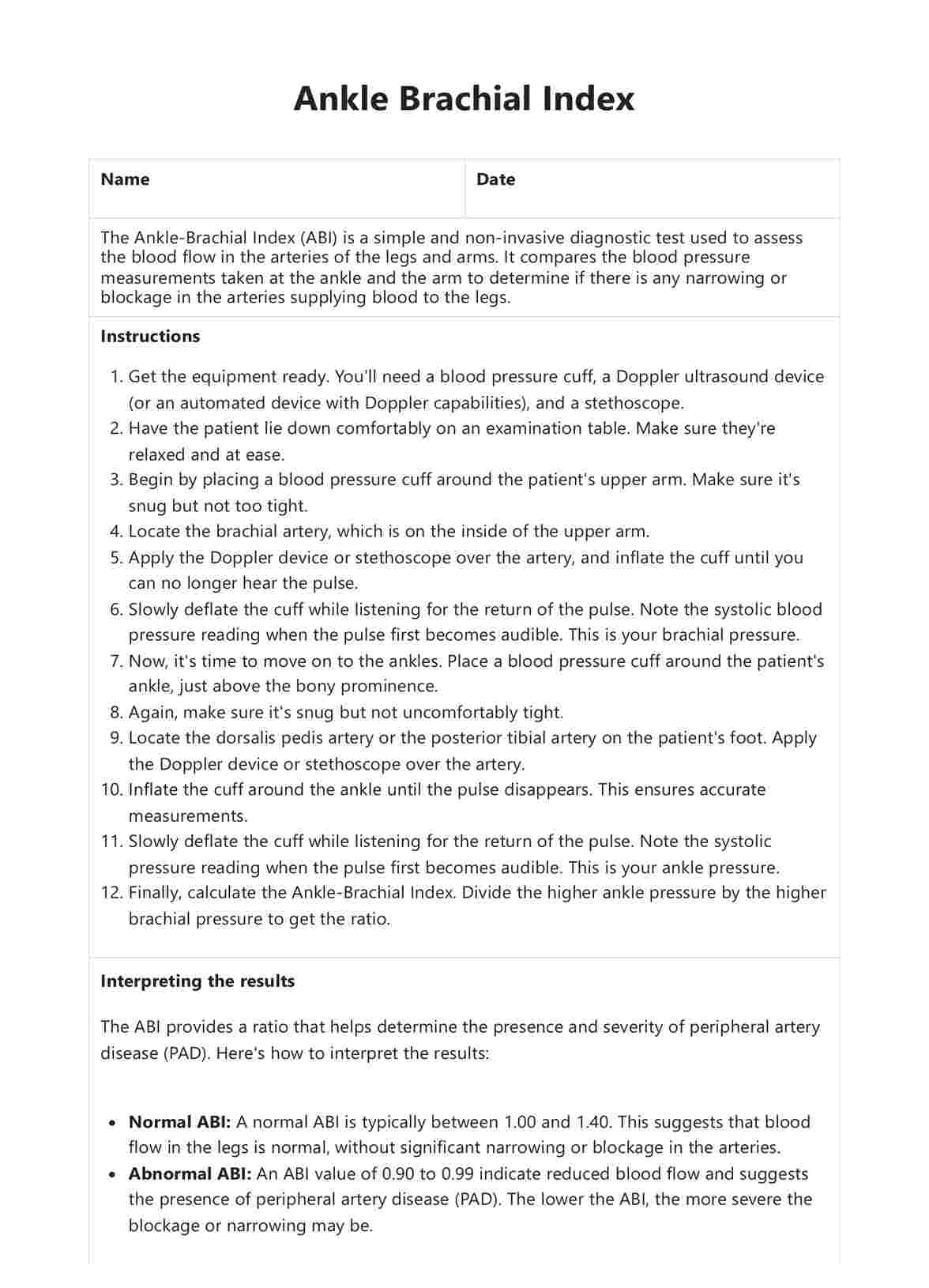




What is an Ankle Brachial Index (ABI)?
The (ABI) is a simple and non-invasive diagnostic test used to assess the blood flow in the arteries of the legs and arms. It compares the blood pressure measurements taken at the ankle and the arm to determine if there is any narrowing or blockage in the arteries supplying blood to the legs.
During an ABI test, blood pressure cuffs are placed on both arms and ankles. The systolic blood pressure (the higher number in a blood pressure reading) is measured using a Doppler ultrasound device or an automatic device. The cuff is inflated to temporarily stop the blood flow and then slowly deflated while the healthcare provider listens to the blood flow using the Doppler device.
The ankle pressure is divided by the brachial (arm) pressure to calculate the ankle-brachial index. A normal ABI is typically between 1.00 and 1.40, indicating normal blood flow. Values 0.90 to 0.99 suggest narrowing or blockage in the leg arteries, which may indicate a risk of peripheral artery disease (PAD). On the other hand, values less than 0.90 can indicate rigid arteries or calcification.