





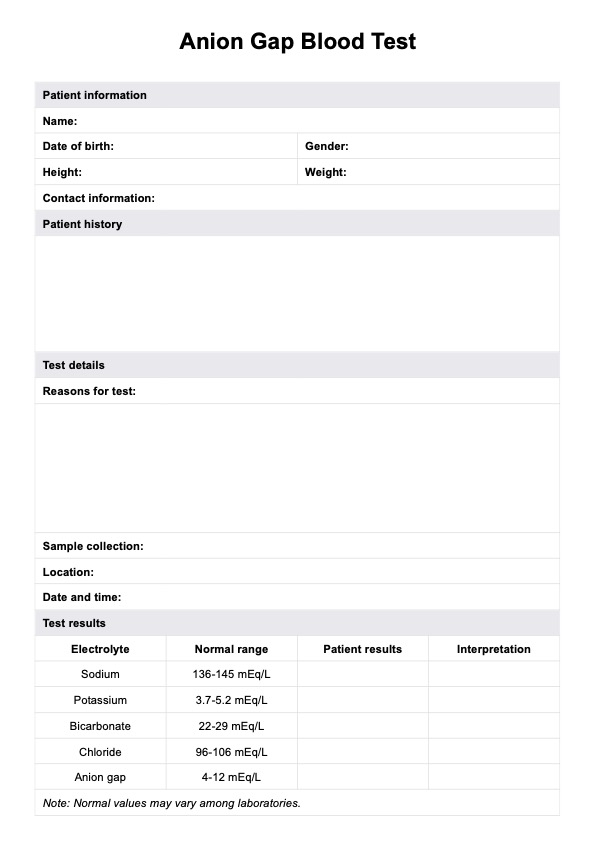




What is an Anion Gap Blood Test?
An Anion Gap Blood Test evaluates the acid-base balance (blood pH) and electrolyte levels in the blood. It identifies whether the blood is too acidic or alkaline, which can indicate underlying medical conditions (MedlinePlus & National Library of Medicine, 2024). The test calculates the difference between positively charged (sodium, potassium) and negatively charged (chloride, bicarbonate) electrolytes in the blood, known as the anion gap measurement.
Electrolytes, critical for maintaining acid-base balance and other physiological processes, are measured using results from blood tests like an electrolyte panel. A normal anion gap indicates proper acid-base and electrolyte balance, while deviations may signal metabolic issues. High anion gap acidosis can result from diabetic ketoacidosis, kidney disease, or salicylate poisoning. Conversely, low anion gap results may reflect rare conditions or lab errors.
Healthcare providers use the anion gap test to diagnose conditions such as blood pH imbalance, acid-base balance disruptions, or electrolyte imbalance. These abnormalities can lead to serious health issues, including blood sugar imbalances or symptoms of high anion gap acidosis like fatigue, confusion, or tachycardia. Understanding anion gap test results helps guide diagnosis and treatment for critical conditions.









