





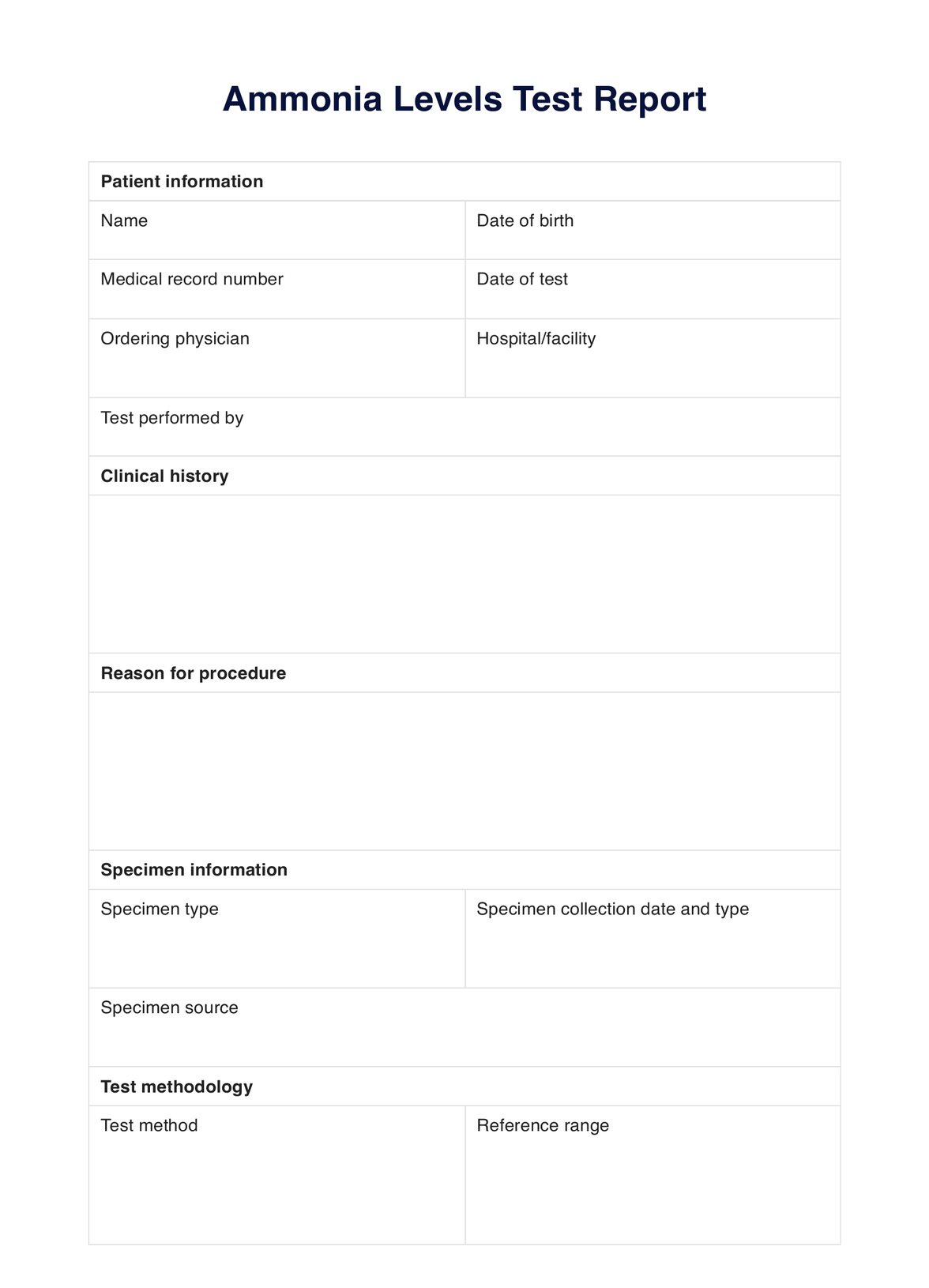




What is an Ammonia Test Levels Report?
Ammonia is a compound that is naturally produced in the human body. It plays a crucial role in the nitrogen cycle and aids in the synthesis of proteins. However, excessive ammonia levels in the body can lead to health complications. It can overwhelm the liver's capability to convert it into urea, resulting in an accumulation that may lead to confusion, fatigue, and, in severe cases, brain damage or death. Thus, monitoring ammonia levels is essential in maintaining optimal health.
Healthcare providers often conduct an Ammonia Levels Test to measure the amount of ammonia in a person's blood. This test is usually ordered for individuals with liver disease, kidney failure, or suspected ammonia toxicity.
It is a simple blood test that can be done at a doctor's office or laboratory. The procedure involves drawing a small blood sample from a vein, typically in the arm. The sample is then sent to a laboratory for analysis.
Ammonia level test results are measured in micrograms per deciliter (mcg/dL) or millimoles per liter (mmol/L). A typical range for ammonia levels in healthy adults is between 15 and 45 mcg/dL or 11 to 35 mmol/L. However, this range may vary depending on the laboratory and individual factors. All these results are typically documented in an.
The report includes the patient's personal information, such as name, age, and gender, along with the test date. It also lists the procedure followed and the equipment used for testing. The results are then recorded and compared to the normal range. If the levels exceed the normal range, it may indicate a potential health issue that should be addressed.









