How to use our treatment guidelines handout template?
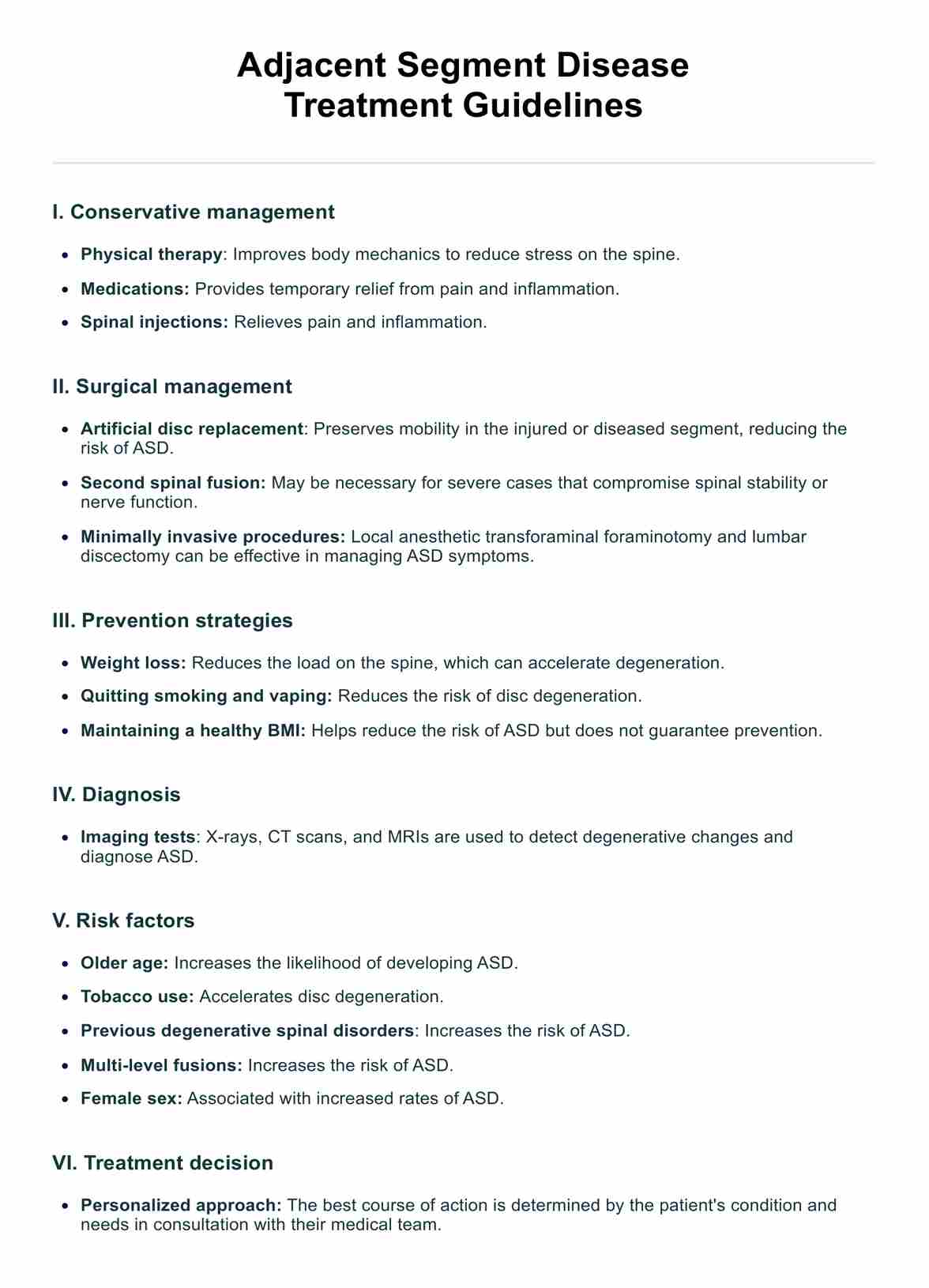
The treatment guidelines handout template for adjacent segment disease is designed to assist healthcare professionals in systematically addressing this complex condition. Following these guidelines, practitioners can provide comprehensive care to patients experiencing adjacent segment degeneration, ensuring effective management of their symptoms and overall spinal health.
Here’s a step-by-step guide on how to use the guidelines:
Step 1: Understand the basics
Begin by familiarizing yourself with the key components of ASD. ASD occurs when the spinal segments adjacent to fused vertebrae undergo degeneration. This often follows lumbar fusion surgery or minimally invasive spine surgery, leading to segment disease. Understanding the underlying causes and symptoms of ASD, such as pain and limited mobility, is crucial for effective treatment.
Step 2: Implement conservative management
The first line of treatment for ASD typically involves conservative management strategies. Physical therapy plays a vital role in improving body mechanics and reducing stress on the spine. Implement a regimen focused on core strengthening, flexibility, and postural training to manage adjacent segment disease conditions.
Medications are also essential for providing temporary relief from pain and inflammation. Prescribe NSAIDs, pain relievers, and muscle relaxants as needed. Additionally, spinal injections such as epidural steroid injections and facet joint injections can be considered to relieve pain and inflammation in the adjacent segments.
Step 3: Plan surgical management
For patients who do not respond to conservative treatments or present with severe ASD, surgical options may be necessary. Artificial disc replacement can preserve mobility in the injured or diseased segment, reducing the risk of developing adjacent segment disease. Assess the suitability of patients for this procedure to maintain spinal motion.
In more severe cases that compromise spinal stability or nerve function, a second spinal fusion may be required. Plan to extend the fusion to include additional adjacent segments if necessary. Minimally invasive procedures, such as local anesthetic transforaminal foraminotomy and lumbar discectomy, are effective in managing ASD symptoms with reduced recovery time and tissue damage.
Step 4: Advise on prevention strategies
Preventive measures are crucial to reduce the risk of ASD and slow the progression of degeneration. Advise patients on the importance of weight loss to reduce the load on the spine. Encourage a balanced diet and regular exercise. Smoking cessation is also critical, as quitting smoking and vaping can reduce the risk of disc degeneration.
Provide resources and support for smoking cessation programs. Maintaining a healthy BMI is another important factor in lowering the risk of ASD, particularly in the cervical spine and lumbar regions. Monitor BMI and recommend lifestyle modifications as needed.
Step 5: Conduct accurate diagnosis
Accurate diagnosis is essential for effective management of ASD. Imaging tests such as X-rays, CT scans, and MRIs can detect degenerative changes and diagnose ASD. These tests provide detailed insights into the condition of the spine and adjacent segments, guiding treatment decisions.
Step 6: Evaluate risk factors
Consider the patient's risk factors for developing ASD. Older age, tobacco use, previous degenerative spinal disorders, multi-level fusions, and female sex are all associated with increased rates of ASD. Understanding these risk factors helps tailor the treatment approach and provide personalized care.
Step 7: Make informed treatment decisions
The best course of action for treating ASD is determined by the individual patient's condition and needs in consultation with their medical team. A personalized approach ensures the chosen treatments are most effective for the patient's circumstances. Involve a multidisciplinary team to provide holistic care and optimize patient outcomes.
By following these steps, healthcare professionals can effectively utilize the treatment guidelines handout template to manage patients with adjacent segment disease, improving their quality of life and functional outcomes.