





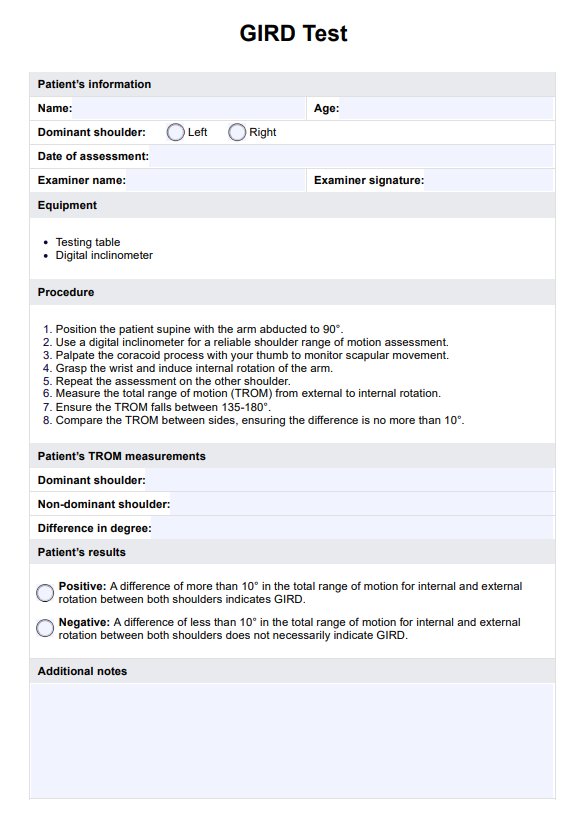




What is glenohumeral internal rotation deficit (GIRD)?
Glenohumeral internal rotation deficit (GIRD) is a condition commonly observed in athletes, particularly those involved in sports that require repetitive overhead motions, such as throwing. It refers to a measurable loss of internal rotation range of motion (ROM) in the dominant shoulder compared to the contralateral shoulder. This deficit often results from adaptive changes in the throwing shoulder joint in response to the demands of repetitive motions, such as those experienced by baseball pitchers.
The primary contributors to GIRD include posterior capsular tightness and adaptive changes in the posterior shoulder structures, including the posterior capsule and posterosuperior rotator cuff. These changes can lead to decreased internal rotation and increased external rotation in the superior shoulder, which may predispose athletes to shoulder injuries, including rotator cuff tears.
Management of GIRD typically involves a combination of physical therapy techniques aimed at restoring shoulder range of motion (ROM) and addressing posterior capsular tightness. These may include specific exercises for stretching the posterior capsule, strengthening the rotator cuff muscles, and modifying throwing mechanics to reduce stress on the shoulder joint.
Understanding and addressing GIRD is crucial for preventing shoulder injuries and maintaining optimal shoulder function in athletes and individuals who engage in repetitive overhead activities. Regular assessment of shoulder range of motion and addressing deficits early can help manage and prevent complications associated with GIRD.









