





What Is a Chest Exam?
The ability to listen, understand and interpret the symphony of sounds produced by the human body is a critical skill for any healthcare professional. This symphony takes center stage in diagnosing conditions related to the heart, lungs, and chest. This is where the comes in.
A chest exam, or chest physical examination, is a procedure that involves a detailed assessment of the chest, including the heart and lungs. It's a tool that healthcare providers use to identify any abnormalities or diseases that might be present in these crucial parts of the body.
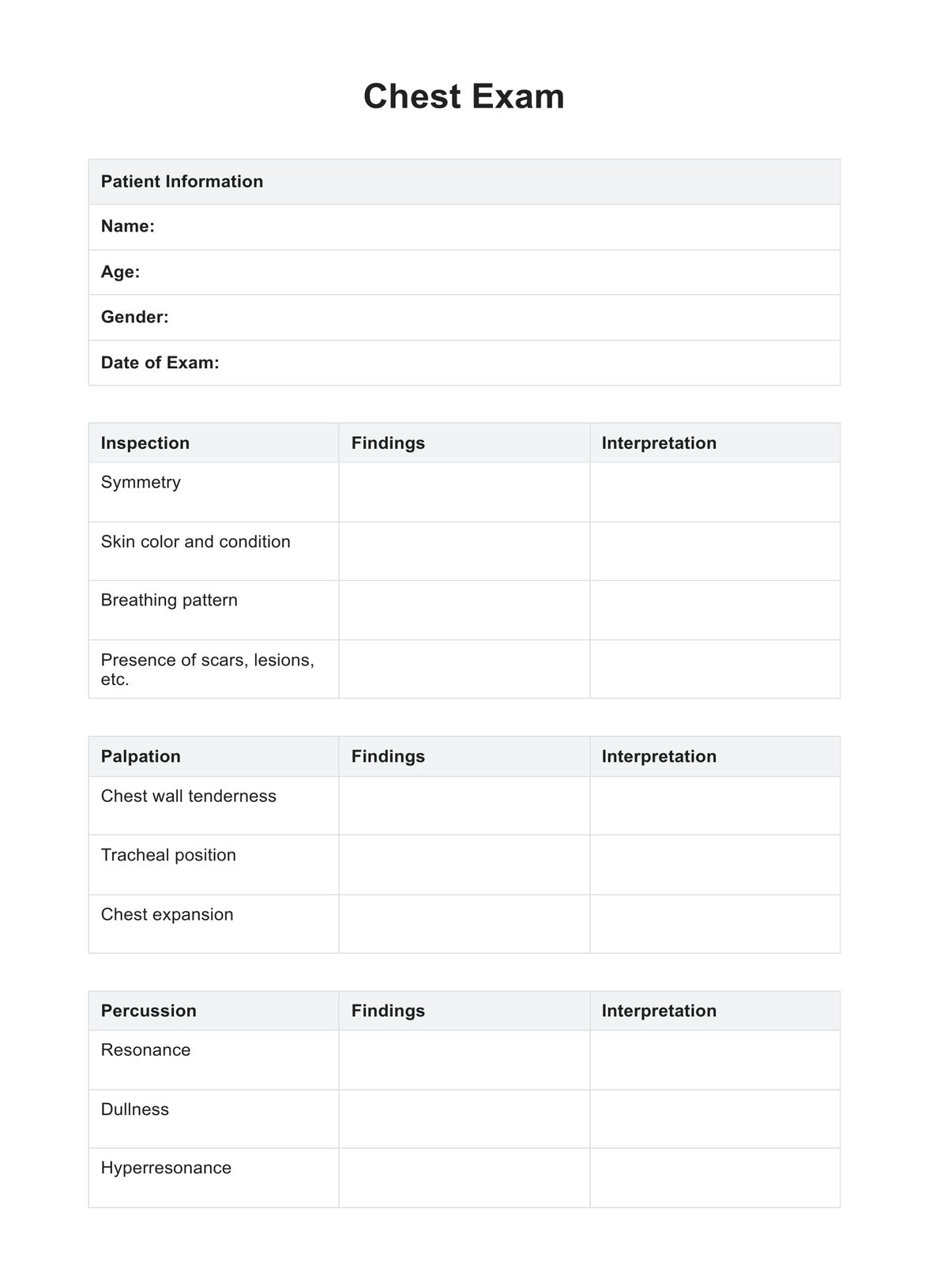
A thorough chest exam comprises inspection, palpation, percussion, and auscultation. The process often begins with a visual examination, where the healthcare provider observes the patient's chest for any visible signs of disease, such as unusual skin color or abnormal breathing patterns. The practitioner then uses palpation to feel for any unusual lumps or tenderness. Percussion involves tapping the chest and listening for sounds that might indicate a problem, like a lung fluid. Finally, using a stethoscope, auscultation enables the healthcare provider to listen to the heart and lung sounds, detecting any variations that could signal an underlying condition.
These techniques, combined, create a comprehensive picture of the patient's chest health, revealing symptoms and signs that could indicate conditions ranging from lung disease and heart conditions to chest infections and trauma.
Our Free PDF Download will provide you with a structured and systematic template for conducting a Chest Exam, enhancing the accuracy and efficiency of your clinical practice. Grab this opportunity to deepen your understanding and refine your chest exam technique as you journey through this guide.









